
This Pottery Barn Tyler recliner review looks at how the leather chair performed after two years of regular use, including its comfort, design, upkeep, and limitations. The Tyler Square Arm Down Blend Churchfield Camel Leather Recliner without Nailheads was delivered in July 2021. It may suit buyers who want a polished, traditional-looking chair, but its manual reclining mechanism, high price, and natural leather wear are worth considering before purchase.


How to Choose a Recliner Chair
A recliner should fit both the room and the person who will use it. Consider how the chair feels upright and reclined, how much space it occupies, and whether its controls match the user’s strength and mobility.
- Appearance: Look for a profile and upholstery that work with your existing furniture.
- Comfort: If possible, test the chair in upright, partially reclined, and fully reclined positions.
- Ease of use: Decide whether a manual push-back design is suitable or whether power controls and additional positions are important.
- Materials: Check the upholstery and cushion construction, and consider how much maintenance they require.
- Size and price: Compare the chair’s measurements with the user’s height and your available space, then weigh the price against the features and construction.
Practical tip: A store test can help reveal whether the back height, seat depth, and reclining motion feel right. Measurements are especially important for taller users and smaller living rooms.

Why Choose the Pottery Barn Tyler Recliner?
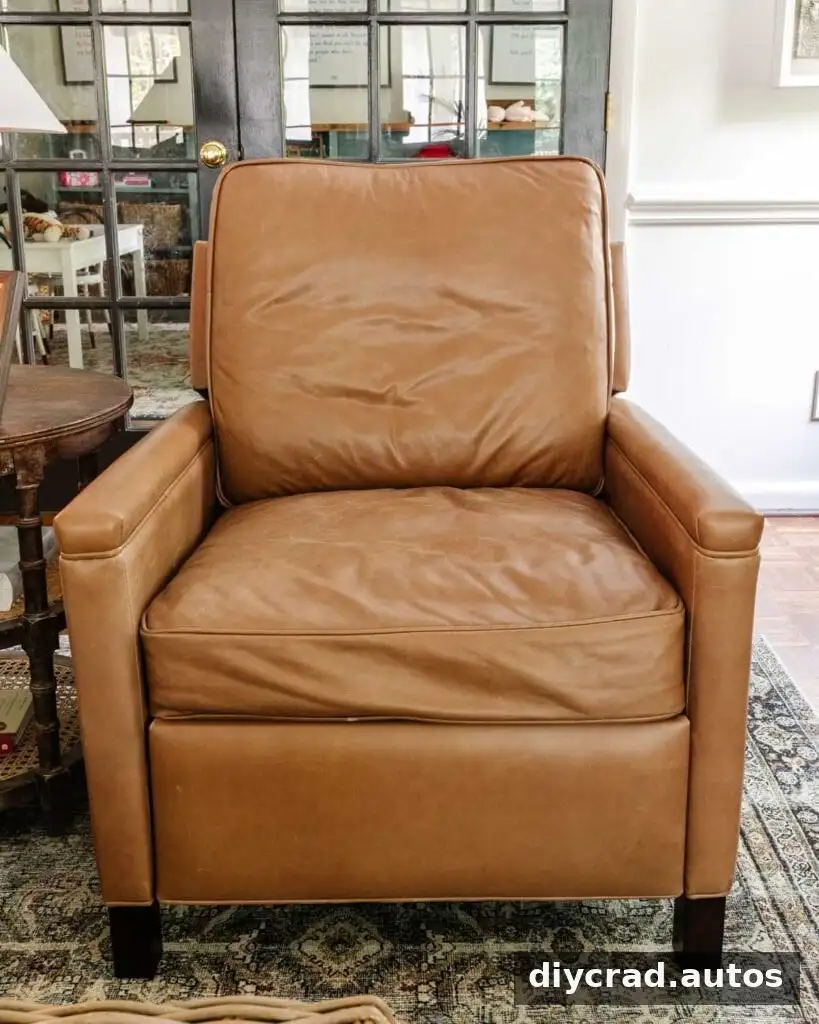
The Tyler model was selected for its low-profile look, soft down-blend cushions, top-grain leather, and classic square-arm design. Upright, it resembles an accent chair more than a conventional bulky recliner. These qualities made it a strong match for a living room where appearance mattered alongside comfort.
The Churchfield Camel upholstery is described as 100% top-grain leather in a warm caramel-brown shade. The cushions have a soft, sink-in feel while still providing support. The household waited to assess the chairs over time rather than judging them only when new.

The review below covers both the benefits and the compromises reported after two years. Leather and cushion condition can vary with use, care, pets, and household routines, so the experience should be treated as a practical reference rather than a guarantee of identical results.

Pottery Barn Tyler Recliner Pros
Comfortable, Supportive Cushions
The down-blend cushions are a standout feature. They feel soft and allow the sitter to settle into the chair, while retaining support. Trying the chair in person can help determine whether this softer feel suits your preferences; people who prefer a firm, upright seat may want to compare alternatives.
Soft Top-Grain Leather
The Churchfield Camel leather is described as supple, with a warm brown tone that adds visual texture to a room. Natural leather develops marks and changes in appearance as it is used, which some owners appreciate as patina. Those who want upholstery to remain pristine may find this characteristic frustrating.

Tailored, Space-Conscious Design
High legs, square arms, and clean lines give the chair a more streamlined appearance than many traditional recliners. The design is not as visually bulky as some models, although it still needs enough clearance to recline. Check the chair’s dimensions and the space around it before arranging other furniture.
Delivery Experience
The household reported a smooth white-glove delivery: the team arrived on the scheduled day, set up the chairs, and checked that everything was in order. Delivery service can differ by location, so confirm the available service, timing, and setup details for your address before ordering.

Pottery Barn Tyler Recliner Cons
Leather Shows Signs of Use
After regular family and pet use, the leather showed scuffs and other signs of wear. This is an important consideration for households with children or animals, and for anyone who dislikes visible changes to upholstery. The review household accepted that the leather would develop character over time.
Care tip: The review recommends using a leather-protection care kit every one to six months, depending on how often the chairs are used. Follow the product and upholstery-care instructions, and test any treatment on an inconspicuous area first.

Cushions Need Occasional Fluffing
Down-blend cushions can look less crisp with use and may need to be fluffed to restore their shape. Their relaxed appearance is part of their softer feel, but buyers seeking a consistently neat, firm seat should keep this upkeep in mind. Regularly adjusting the cushions can help maintain a more even appearance.
Limited Manual Reclining Positions
This manual model has three reclining positions and uses a push-back mechanism rather than a hand lever. Reclining and returning the chair upright require some arm strength, and holding it fully reclined may take extra effort. It may not be the best fit for someone with limited strength or mobility.
A power version is available for buyers who want more control over reclining positions. Compare the operating method and available positions before deciding; the manual model’s simplicity may work well for some users but be inconvenient for others.

Check the Size and Weight
The standard chair’s back height may not suit everyone taller than six feet. The household members who reviewed it were about 5 feet 7 inches tall, and their heads rested against the chair back. Pottery Barn now offers Tall Recliner and Extra Tall Recliner options, listed as 41 inches and 45 inches respectively. Confirm current dimensions and try a suitable size when possible.
The chairs are also heavy, which can make rearranging a room difficult. Plan their placement before delivery, especially if the furniture may need to be moved frequently.

High Price and No Furniture Warranty
At the time of the original review, the selected Tyler square-arm recliner was listed at $1,999 per chair. Prices can change, so check the current price and terms before purchasing. The review considered the leather and down-blend cushions a worthwhile investment, but the cost may not fit every budget. Sale pricing may be available at times; verify any offer and its conditions directly with the retailer.
The review also noted that Pottery Barn did not offer a furniture warranty for this chair, while a 30-day money-back guarantee was available. Warranty coverage and return terms can change, so confirm them in writing before ordering. Pay particular attention to what is and is not covered for the frame, reclining mechanism, and upholstery.
Overall Pottery Barn Tyler Recliner Review
After two years, the Pottery Barn Tyler recliner remained a comfortable and visually appealing choice for the reviewing household. Its soft cushions, supple leather, and tailored design are the main strengths. The trade-offs are visible leather wear, occasional cushion fluffing, a manual mechanism with only three positions, substantial weight, and a high purchase price.
This chair may suit buyers who value classic styling and a soft, supportive seat, and who are comfortable with leather developing patina. It may be less suitable for people who need effortless power reclining, a very firm cushion, low-maintenance upholstery, or a chair sized for someone over six feet. Comparing measurements, trying the recliner, and reviewing current warranty and return terms can make the decision more informed.
In short, this Pottery Barn Tyler recliner review finds that the chair’s comfort and design can justify its cost for some households, but its size, upkeep, and manual operation make it a personal fit rather than a universal recommendation.
The chairs in the living room after one month:

The chairs in the living room after two years:

Frequently Asked Questions
What should you look for in a recliner brand?
Compare comfort, construction, upholstery, sizing, available controls, warranty coverage, and return terms. Try chairs in person when possible, since the right fit depends on the user’s height, preferred seat firmness, and mobility needs.
How long should a recliner last?
The original review gives a general estimate of about 7 to 15 years for quality recliners and notes that leather chairs may last up to 20 years. Actual lifespan depends on materials, construction, frequency of use, care, and the condition of the reclining mechanism.
Which lasts longer: manual or power recliners?
Lifespan depends on the chair’s construction, how often it is used, and how it is operated. Power controls can provide more precise positioning, while manual push-back models have a simpler operating method. Compare the warranty and mechanism details rather than assuming one type will always last longer.