

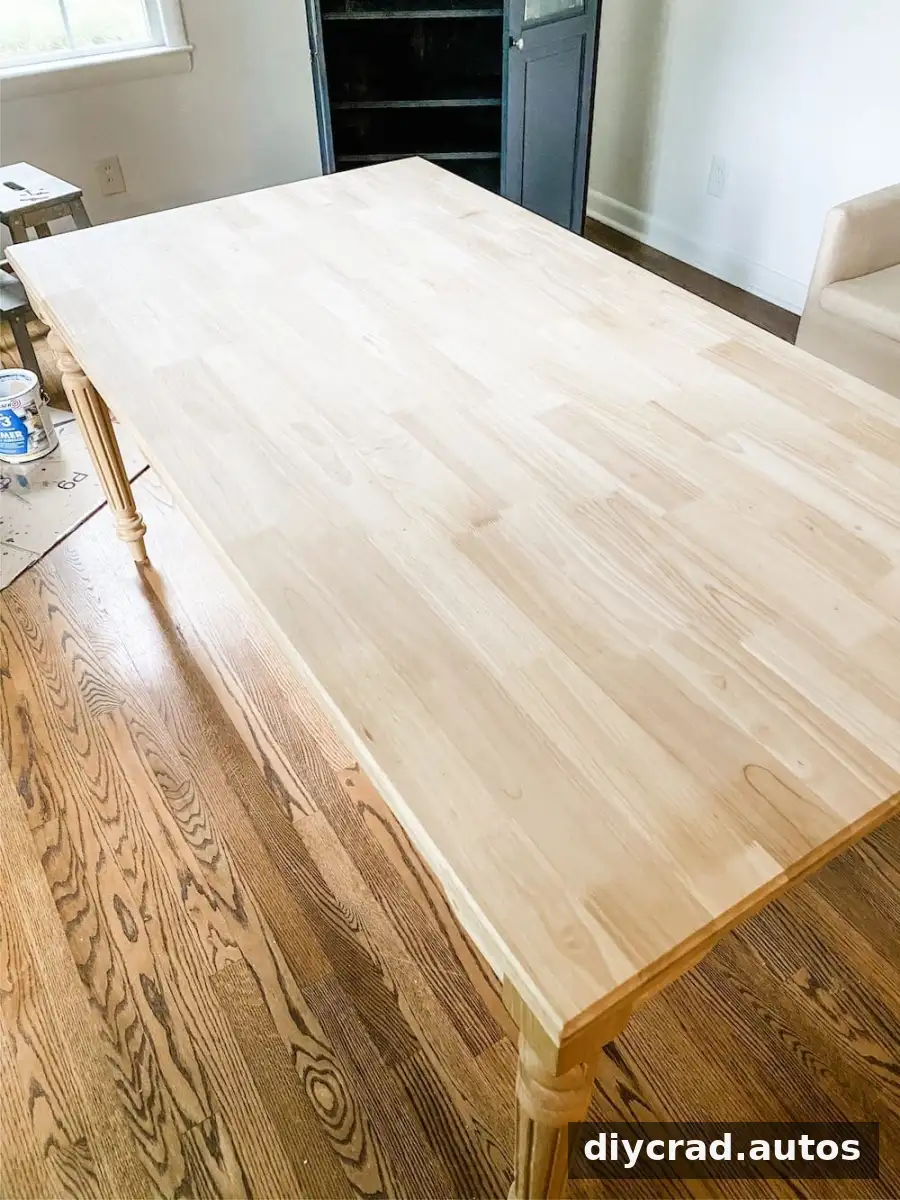
Unfinished furniture can be a practical, budget-conscious way to get a piece that suits your room and your needs. For a home office work table, an affordable, pre-built solid wood option offers a useful balance: the main assembly is already done, while the unfinished surface leaves room to choose a stain and finish that fit your decor.
Why consider unfinished furniture for a work table?
A pre-built unfinished piece can offer some of the flexibility of a furniture project without requiring you to construct the table from scratch. It can also make it easier to coordinate the wood tone with other finishes in the room. In this project, the table was selected as a budget-friendly option and customized with stain.
Before buying, check the product details to confirm the material, dimensions, and whether any assembly is required. “Unfinished” describes the surface treatment; it does not automatically mean every piece is made from solid wood. For a desk or work table, also consider the available floor space and how much room you need for a chair and everyday equipment.
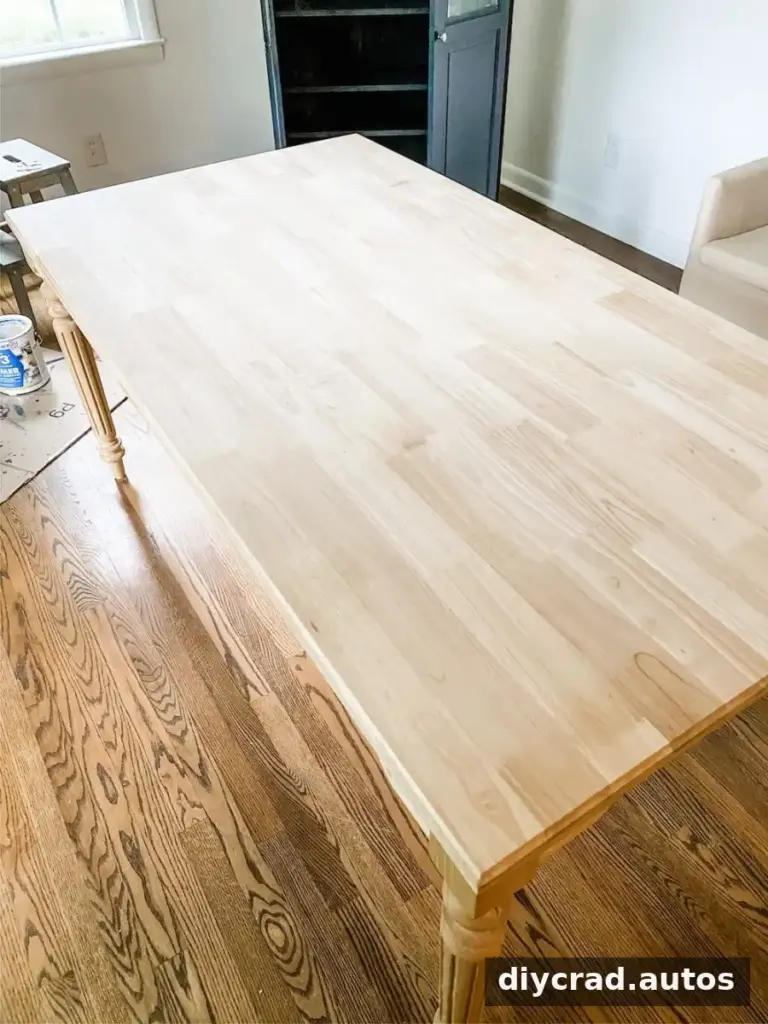
Prepare the surface before staining
Unfinished furniture may have a light protective coating or surface residue, so check the maker’s care instructions before starting. If sanding is needed, use fine sandpaper and sand lightly and evenly. The goal is to prepare the surface, not remove more wood than necessary. Remove dust before applying any products.
Test the stain and finish on an inconspicuous area or a spare piece of the same wood first. Wood can absorb stain unevenly, and the final color may look different from a sample or container. A small test helps you decide whether the shade suits the room before treating the whole table.
Condition and stain the wood
Wood conditioner can help reduce a blotchy appearance on wood that absorbs stain unevenly. Apply it according to the product directions, then wipe away excess with a clean, dry, lint-free rag after the recommended wait. Follow the label for timing and compatibility with your chosen stain.
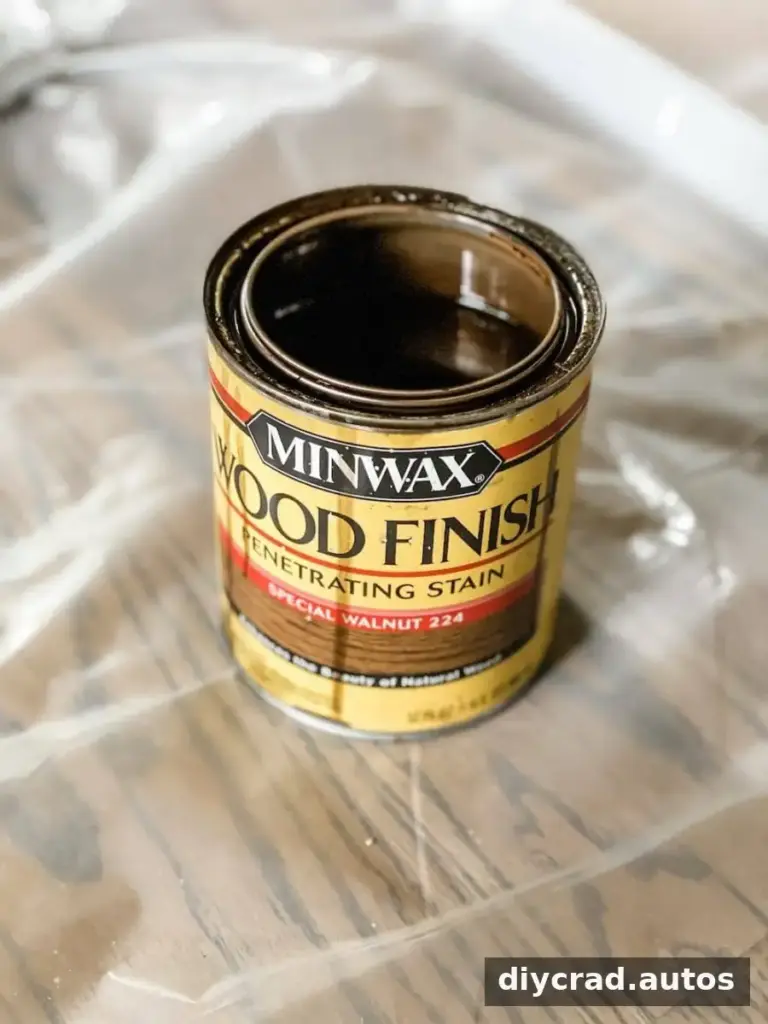
For this table, the selected shade was Special Walnut. Apply stain with a brush or cloth as directed on its label. Let it sit for 5–10 minutes, then wipe off the excess. If you want a deeper color, apply another coat only after checking the instructions and allowing the previous coat to dry as specified.

Work in manageable sections and wipe with the grain where practical. Keep a consistent pace so one area does not sit with stain much longer than another. Gloves and good ventilation are sensible precautions when working with stains and finishes.
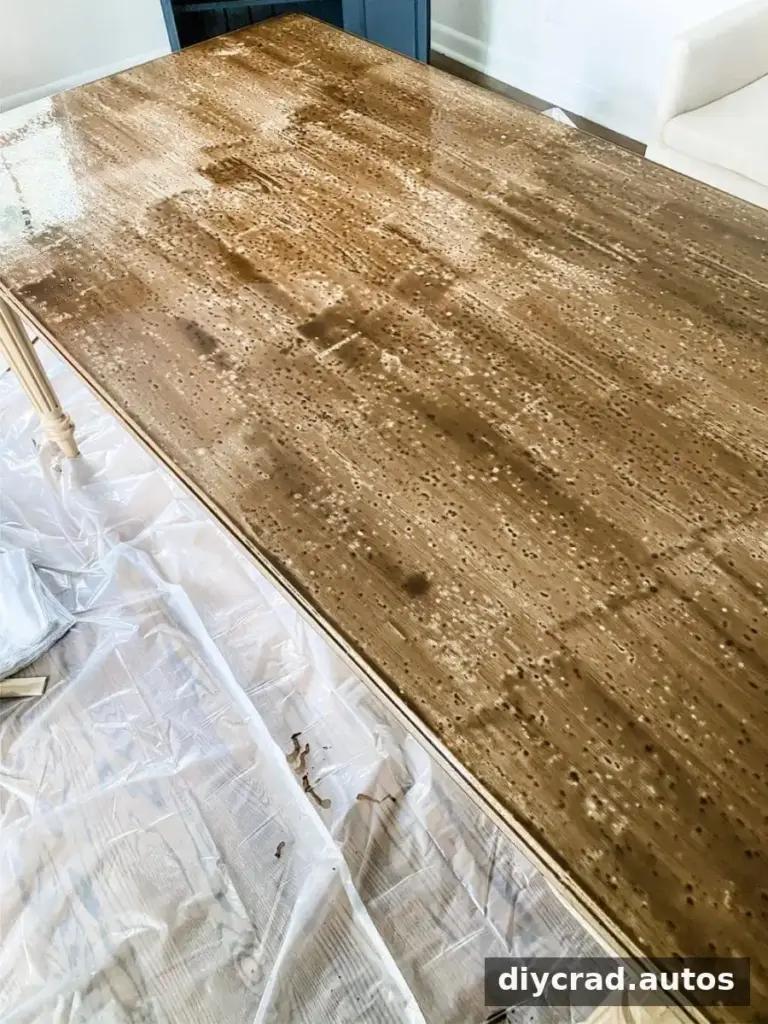
Seal the table for everyday use
Once the stain is dry, apply a couple of coats of water-based polyurethane, following the label for application, drying time, and any light sanding between coats. Water-based finishes are often chosen when a clearer appearance is preferred; oil-based finishes can add a warmer tone and may yellow over time. The finish label will explain the product’s intended use and curing requirements.
Let the table cure for the full time stated by the manufacturer before placing heavy items on it or using it regularly. This extra wait can help protect the surface from scratches and marks. Dispose of used rags according to the product safety instructions, and keep finishes away from heat or flames.
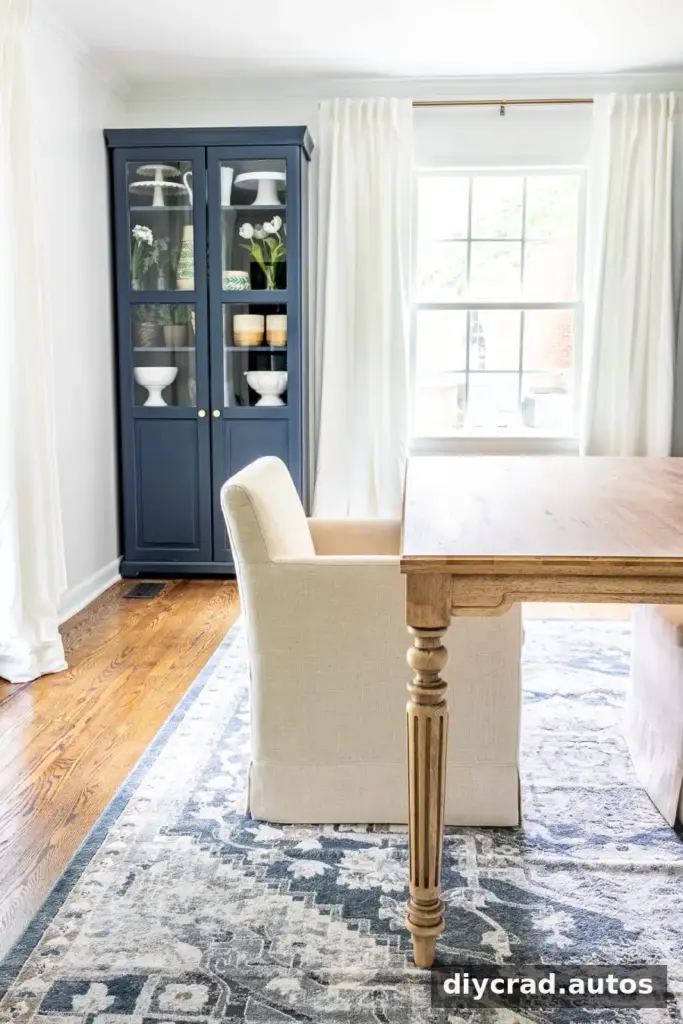
Style the home office around the table
After the finish has cured, coordinate the work area with practical pieces that suit the room. This office setup includes an area rug, rolling armchairs, creamy white curtains, and modern brass curtain rods. A desk lamp or overhead fixture can add useful task lighting, while accessories can be chosen to complement the stain without crowding the work surface.
When planning the layout, leave enough space to pull chairs back and move around comfortably. Measure the table and the surrounding area before adding a rug or other furniture. For glass doors, privacy film can be an option, but check that the material is suitable for the glass and apply it according to its instructions.
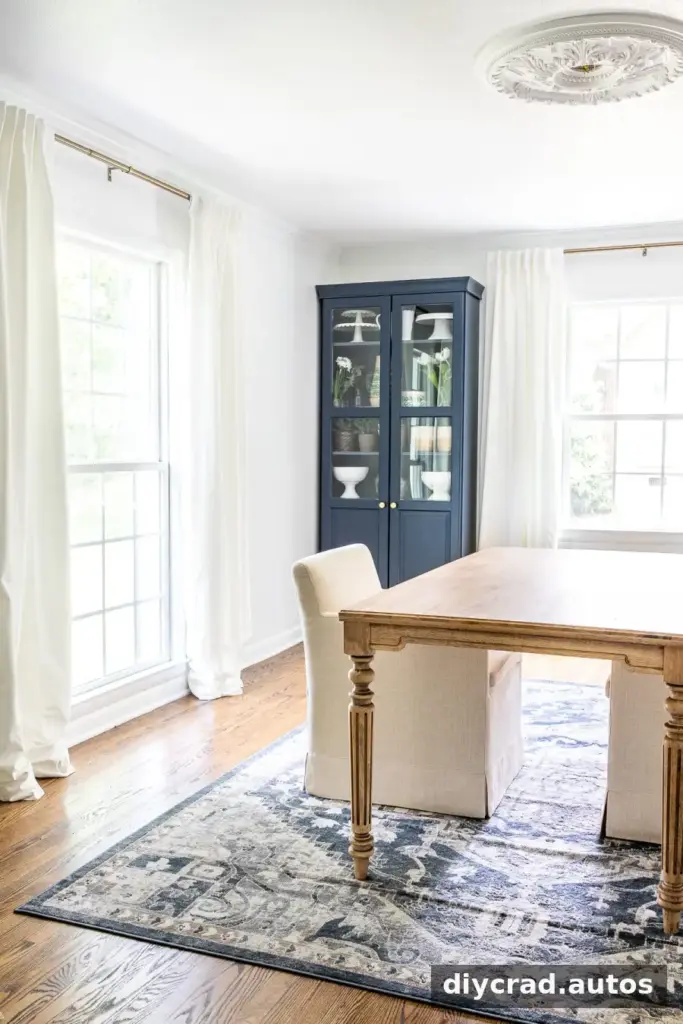
Choosing unfinished furniture for your home
When comparing unfinished furniture, look for clear information about wood type, construction, dimensions, and finish requirements. Check whether the piece needs sanding or conditioning and whether the products you plan to use are compatible. A simple finish can make a table easier to coordinate with an existing room, but the time needed for drying and curing should be part of the project plan.
For office accessories, prioritize function as well as appearance: choose organizers that fit the desk, keep frequently used supplies within reach, and leave enough clear space for working. This helps the customized table remain useful after the makeover is complete.

Conclusion
Unfinished furniture can be a flexible starting point for a personalized home office. With careful surface preparation, a tested stain color, and a protective finish applied according to product directions, a pre-built work table can better suit both the room and its daily use.

