

To upgrade plain windows, focus on three details that work together: decorative trim, curtains, and textured shades. These additions can give a bedroom a more finished look, bring softness to the space, and make simple windows feel like an intentional part of the design.
How to Upgrade Plain Windows with Three Details
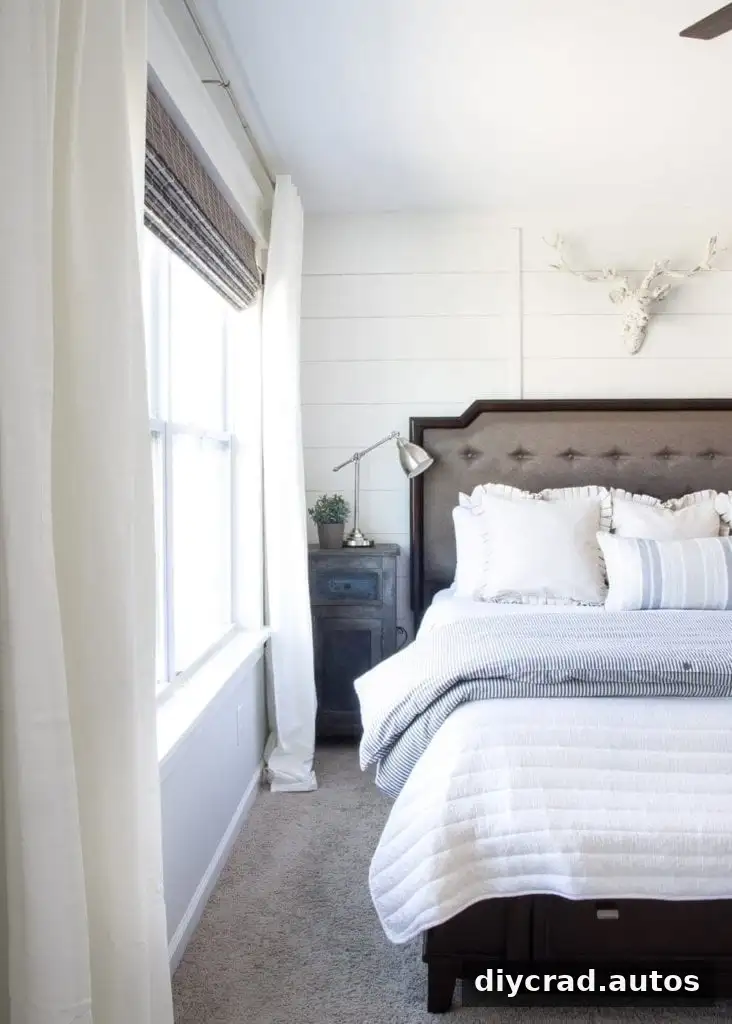
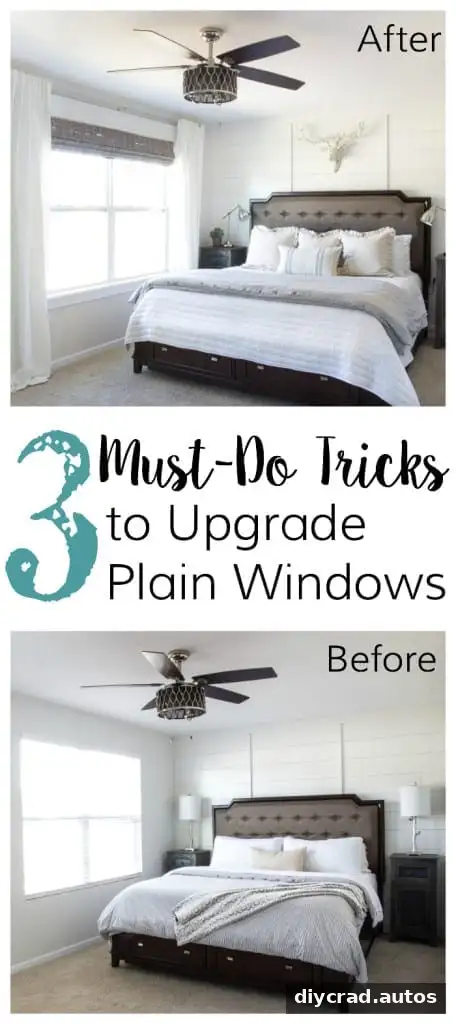
A bedroom makeover can change dramatically when the windows receive a little attention. In this room, Craftsman-style trim, long white curtains, and driftwood-look Roman shades were added to complement a planked board-and-batten wall. Each element has a different role, but together they create a layered, cohesive finish.

The starting point was a set of plain windows. Rather than relying on a single decorative feature, the update used three complementary treatments to add definition, softness, and texture.

1. Add window trim for definition
Trim frames a window and gives it a more substantial appearance. Simple Craftsman-style trim can suit farmhouse and traditional interiors, while a clean, uncomplicated profile can also work in more modern rooms. For a connected look, choose a trim style that relates to the room’s existing doors, baseboards, or wall details.
Before installing trim, measure each window carefully and check that the surrounding wall is in good condition. Consistent spacing and neat joints help the finished frame look intentional. If the room already has a feature wall, matching the trim’s color to the other painted details can help the different elements feel unified.
2. Hang curtains to soften the room
Long curtains add a softer layer around hard window edges and can make a bedroom feel more welcoming. White curtains were used here to balance the darker and more textured details in the room. A neutral fabric is also easy to coordinate with changing bedding, wall colors, and accessories.
For a balanced appearance, position the curtain rod high enough to create a sense of height and allow the panels to extend beyond the sides of the window. Measure the rod and curtain length before buying fabric so the panels cover the window as intended. If the curtains are mostly decorative, they can frame the window while the shades provide day-to-day light control.

3. Use Roman shades to bring in texture
Replacing plain white blinds with driftwood-look Roman shades added a natural texture to the window treatment. Roman shades create a softer, more tailored appearance than many basic blinds, while their folded fabric gives the window visual interest when raised.
When choosing shades, consider how much light and privacy the room needs. Measure the window according to the fitting style and the shade maker’s instructions; inside- and outside-mounted shades require different measurements. A textured shade can add warmth, while a simpler fabric may be a better choice if the room already has several prominent patterns.

Bring the window treatments together
The strongest result comes from treating trim, curtains, and shades as one arrangement. In this bedroom, the white curtains softened the windows, the Roman shades introduced texture, and the trim gave the whole composition a defined edge. The layers also worked alongside the room’s planked wall rather than competing with it.
Natural light can look especially appealing when it filters through light-colored curtains. A nearby mirror may help reflect that daylight around the room. For a cohesive makeover, repeat a few finishes elsewhere—for example, in lighting or hardware—without trying to match every item exactly.

Other room details can support the finished look, but they are not essential to the window update. A decorative wall accent, different lamps, or a future area rug can be considered separately. Completing the window treatments first makes it easier to judge what the rest of the room still needs.

Practical tips before starting
- Plan the layers: Decide whether shades will provide privacy, light control, or both before selecting curtains.
- Measure twice: Check the window, trim, rod placement, and panel length before purchasing materials.
- Keep the style consistent: Choose trim and fabrics that complement nearby wall details and furnishings.
- Balance texture: If the room already includes a prominent feature wall, use calmer curtain colors and patterns.
- Finish one step at a time: Installing trim, shades, and curtains in stages makes it easier to check fit and appearance as you go.
A simple bedroom makeover checklist
Window upgrades can be part of a larger room refresh. A practical checklist helps separate completed work from projects that can wait:
- Paint the walls
- Install a planked board-and-batten feature wall
- Update dresser hardware
- Install window trim
- Change the lamps
- Hang wall decor above the bed
- Replace plain blinds with textured shades
- Hang curtains
- Update the mirror
- Refinish and hang barn doors
- Choose an area rug
- Decide whether to adjust the bed’s finish
It can be helpful to complete the larger visual changes before choosing smaller accessories. That way, the final rug, bedding, or furniture finish can be selected to suit the room as it looks now.

Conclusion
To upgrade plain windows, combine trim for structure, curtains for softness, and Roman shades for texture and practical coverage. These three changes can refresh a bedroom without requiring a complete redesign. Measure carefully, coordinate the materials with the rest of the room, and let the window treatments support—not overwhelm—the overall style.

