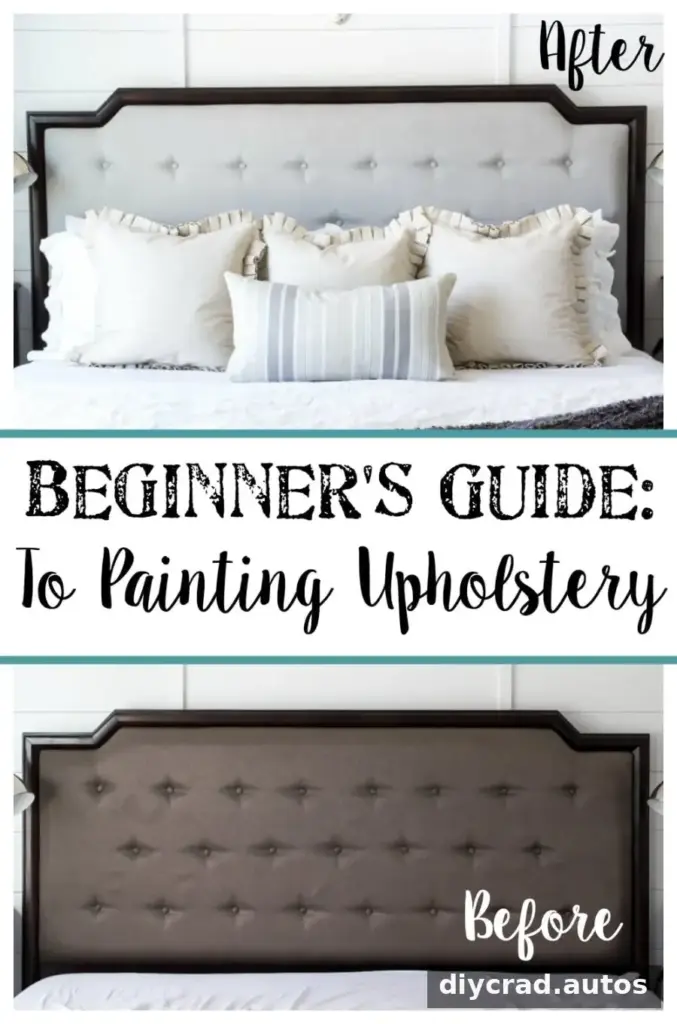
Painting upholstery can refresh a fabric headboard or other furniture when its color no longer suits a room. The process is straightforward, but preparation and patient application matter: paint can initially look uneven and may leave fabric stiff until it is fully dry and lightly sanded. Test the method on a hidden area first, since results vary with the fabric and its condition.

Painting upholstery: supplies and preparation
For this project, a king-sized upholstered headboard took one quart of chalk paint. That amount is a reference point rather than a guarantee; the fabric’s texture, absorbency, and the number of coats can affect how much paint you need.
- Chalk paint
- A cup or small pail for mixing
- Painter’s tape, if the upholstered area meets a wood or other finished frame
- A good-quality paintbrush; a 3-inch angled brush was used here
- Fine-grit sandpaper; 320 grit was used for this project
- A drop cloth to protect the bed, floor, or nearby furniture
- Clear soft wax or another clear wax, if you choose to apply a protective finish
- The upholstered furniture you plan to paint
Before starting, clean the upholstery and let it dry completely. Check the fabric care guidance where available, and try the paint mixture in an inconspicuous spot. This small test can help you judge the color, coverage, and feel before committing to a visible area. Protect surrounding surfaces with a drop cloth and use painter’s tape to cover any frame sections you do not want painted.

Mix the paint and apply the first coat
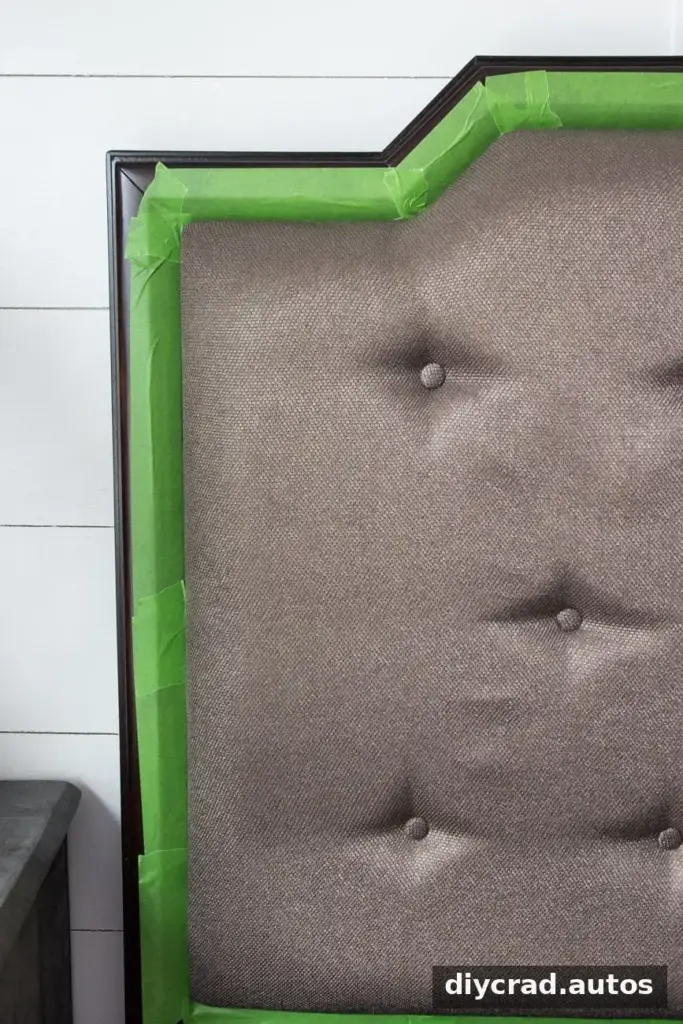
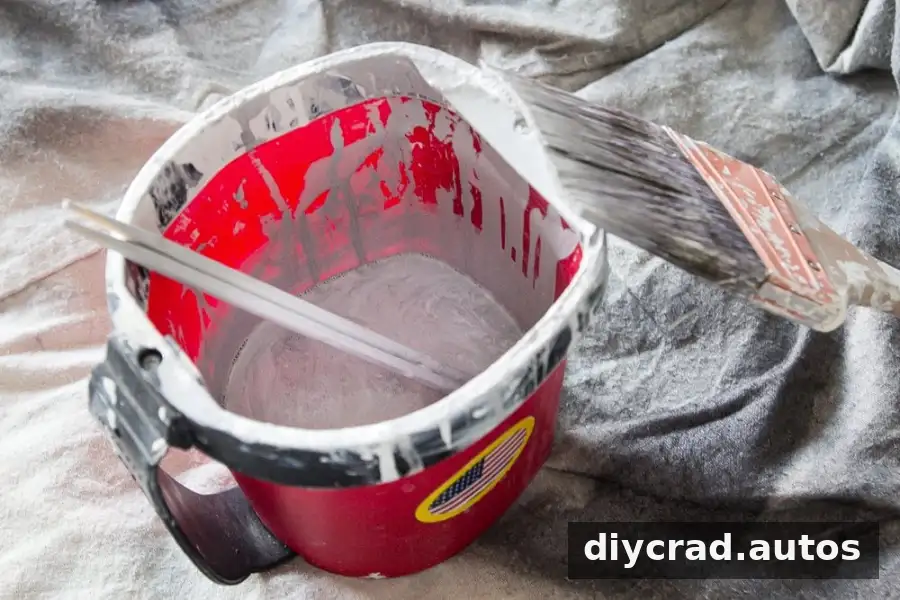
Tape along the edge of the wooden bed frame so paint does not seep onto the finish. Mix three parts paint with one part water in a pail, stirring until the mixture is consistent. Keep stirring occasionally while working, because the paint and water can separate.
For this headboard, the paint color used was Paris Grey. Place a canvas drop cloth over the mattress or other nearby surfaces before you begin. Even careful brushing can lead to drips, so covering the area is a useful precaution.
Brush the thinned paint onto the upholstery in steady strokes. Work in one consistent direction—in this example, the brush moved straight up and down—and avoid applying more liquid than the fabric can absorb. Take care around seams and edges, where paint can collect. Allow the first coat to dry fully before deciding whether another coat is needed.
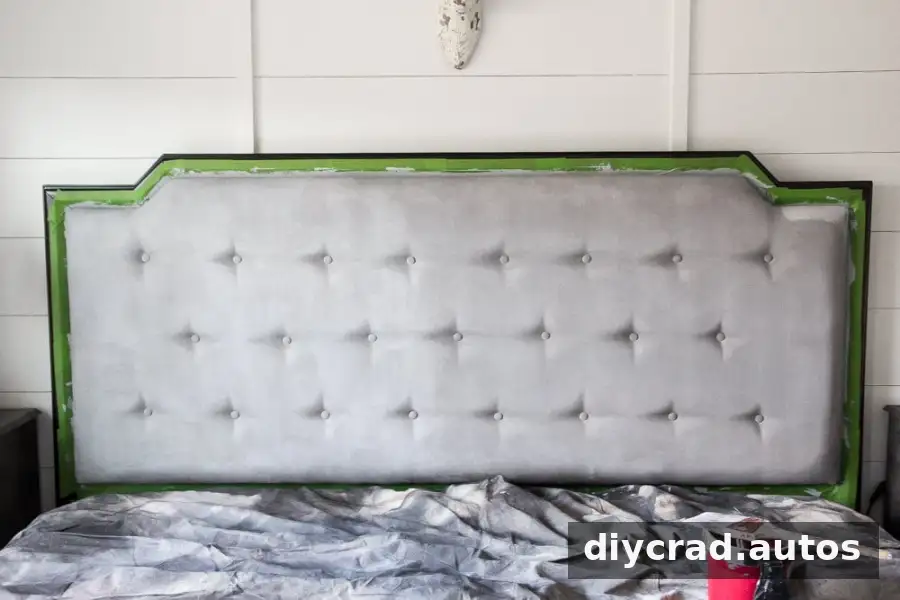
The first coat may look patchy, and the fabric can appear worse before it looks better. That uneven appearance does not necessarily mean the project has failed. Let the coat dry rather than trying to correct it with extra wet paint, which can saturate the fabric.
Build coverage with additional coats
Apply a second coat after the first has dried. In this project, the second coat improved the coverage, though some areas still looked uneven. A third coat was added, bringing the total to three coats of the paint-and-water mixture.
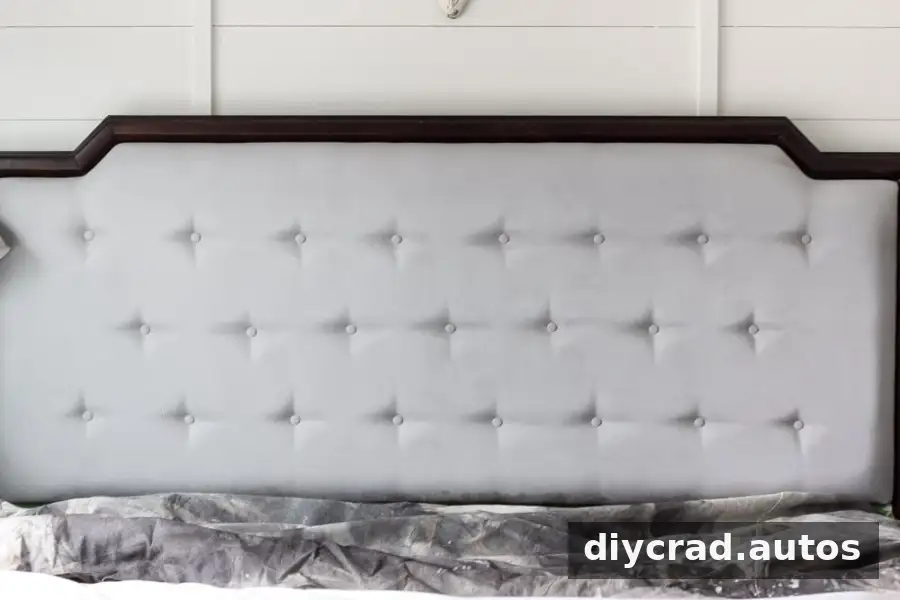
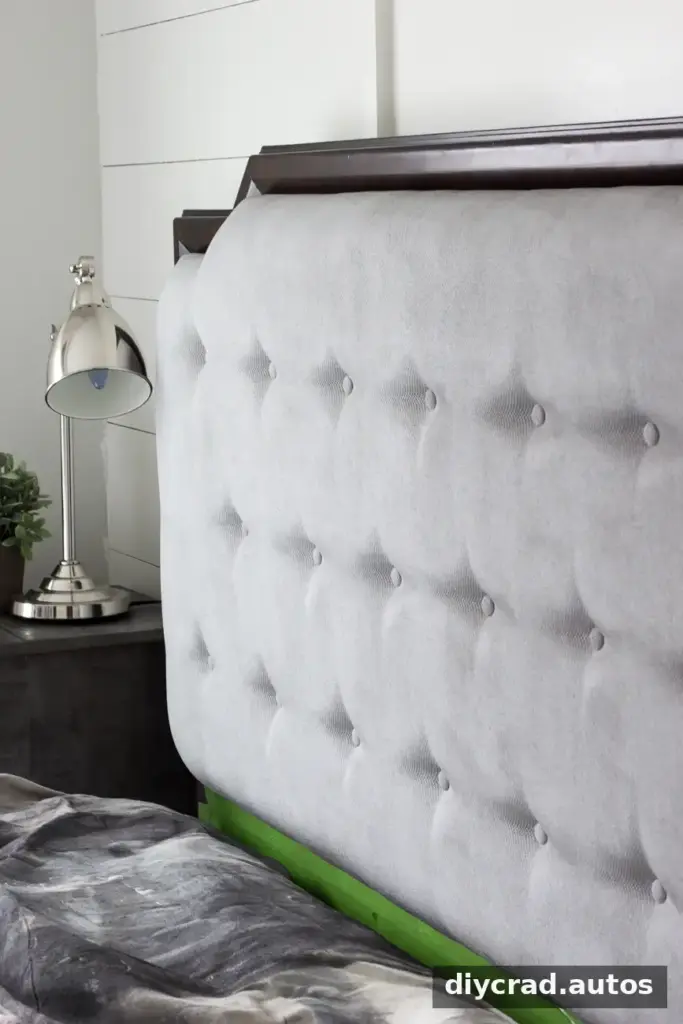
Coverage needs can differ from one piece to another, so assess the surface after each coat instead of assuming every project will require exactly three. Keep coats even, and allow each one to dry before adding the next. Follow the paint product’s drying guidance, especially if the room is cool or humid.
Sand the surface and consider a finish
Once the final coat is dry, the fabric may feel stiff, as though it has a layer of paint on it. Lightly sand the entire painted area with fine-grit sandpaper. The 320-grit paper used here softened the finish and helped the surface feel more velvety. Sand gently and evenly; heavy pressure could damage the fabric or remove too much paint.
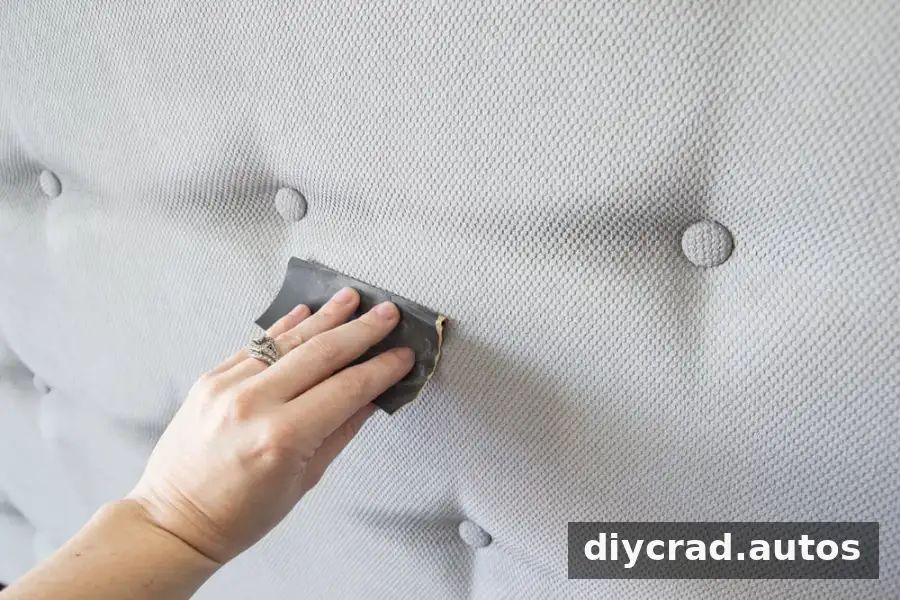
Clear wax is optional, but the best choice depends on how the furniture will be used. A headboard that is rarely touched may not need the extra finish. For a chair or sofa that gets regular use, a protective topcoat may be worth considering. Check that the finish is suitable for the paint and fabric, and test it on a hidden spot before applying it broadly.

Check the result and care for painted upholstery
After sanding, inspect the piece in natural and indoor light to check for missed areas or uneven coverage. Let the surface cure according to the paint and finish instructions before putting the furniture back into regular use. Avoid scrubbing painted fabric; if cleaning is needed, follow the product guidance and test a gentle method in an inconspicuous area first.

The gray finish coordinated more closely with the room’s nightstands and rug, giving the headboard a refreshed look without replacing the furniture. Keep in mind that painting changes the feel of upholstery, so it may be better suited to a headboard or decorative piece than to fabric that needs to remain especially soft.

Conclusion: Is painting upholstery right for your project?
Painting upholstery can be a practical way to update a fabric-covered piece when you are comfortable with a finish that may feel different from the original material. For the best chance of a neat result, test first, protect nearby surfaces, apply thin and consistent coats, let each coat dry, and sand gently at the end. With those steps, painting upholstery can refresh a headboard or other suitable furniture while helping its color fit the room.