

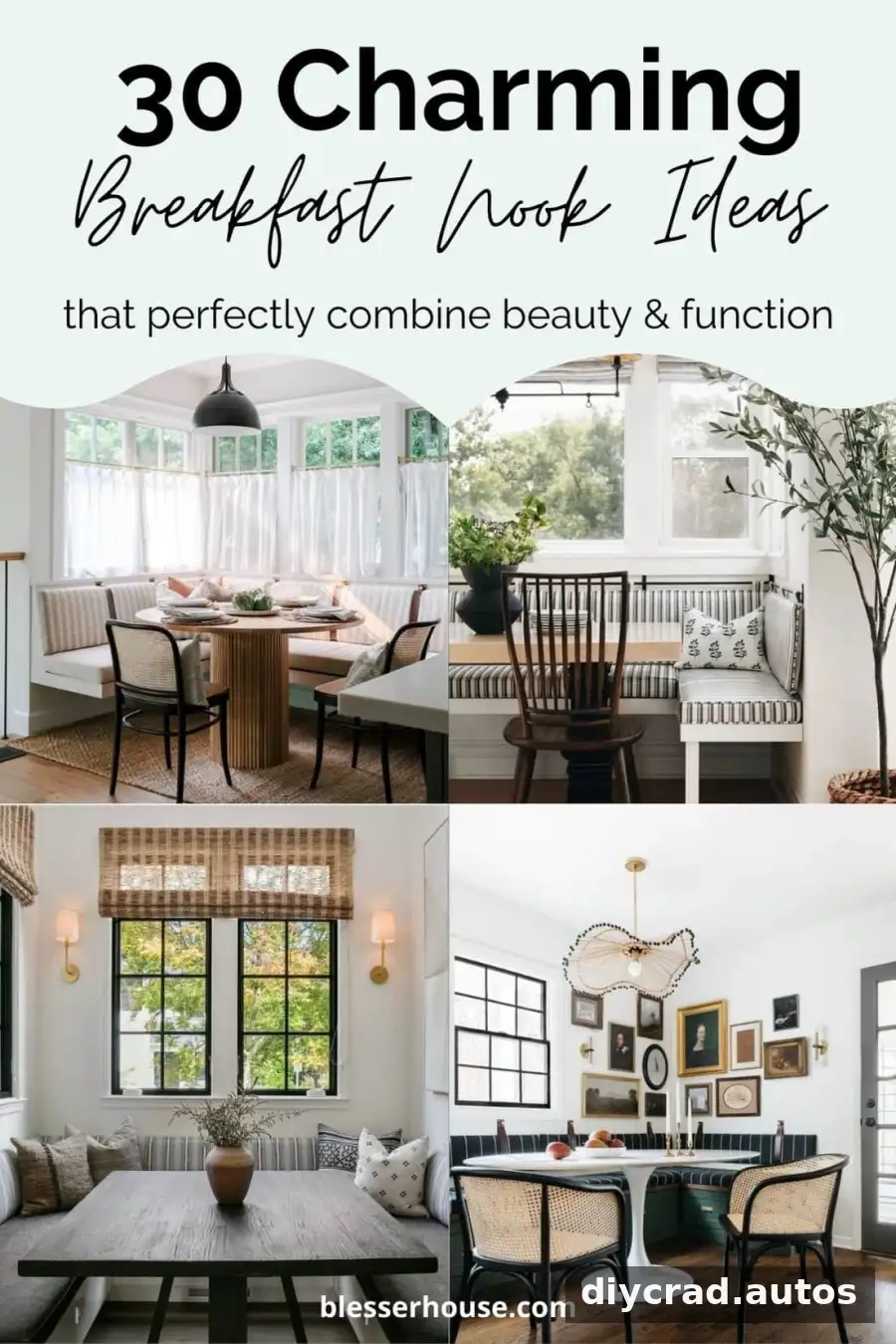
Thoughtful breakfast nook ideas can turn an underused corner into a comfortable spot for meals, homework, coffee, or everyday conversation. A built-in bench may save floor space, while practical details such as accessible storage, durable fabrics, and well-planned lighting can make a small dining area work harder.
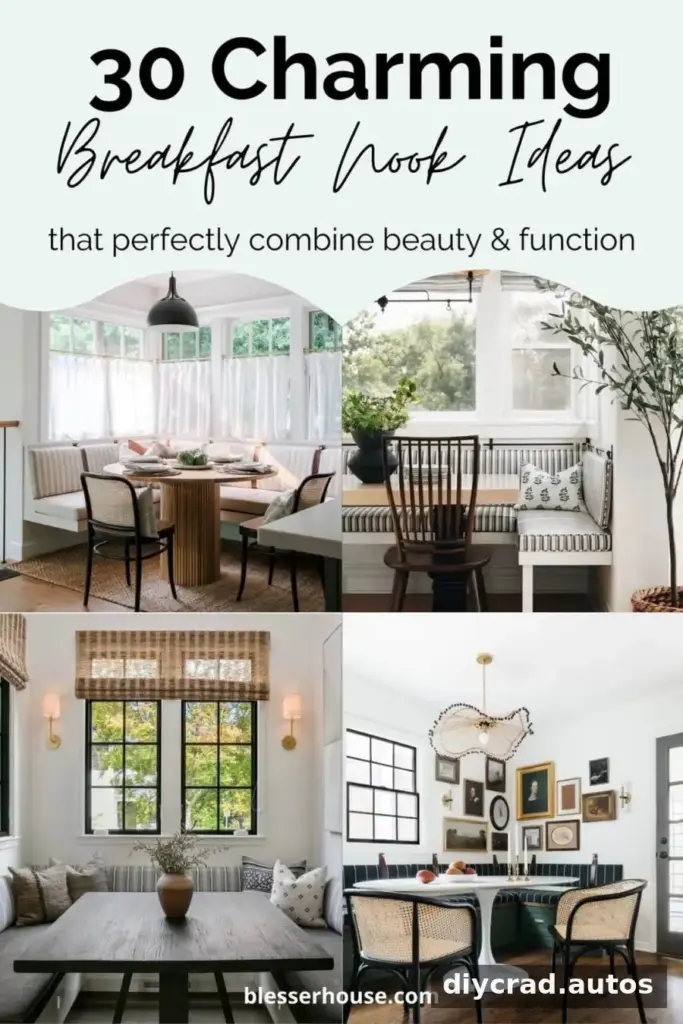
A kitchen renovation that involves changing the layout or relocating a doorway often happens in stages. Planning a breakfast nook alongside nearby spaces can help preserve clear walkways and make sure the seating, table, and storage fit together before construction begins.
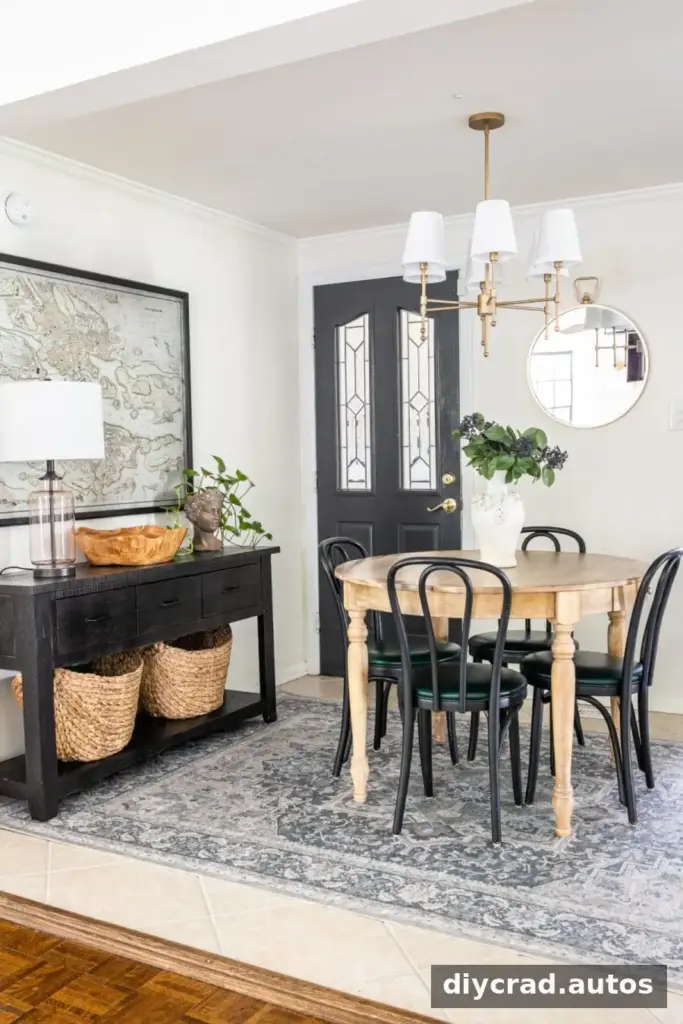
Breakfast Nook Ideas for a More Functional Kitchen
The ideas below offer different ways to balance seating, movement, storage, and style. Before choosing a design, measure the available area and consider how people will move between the nook, kitchen, and nearby doors.
The following images are shared with permission by their designers and/or photographers. Images may be subject to copyright.
1. Upcycle a Restaurant Booth for a Breakfast Nook Banquette
A vintage booth can give a banquette distinctive character, while a tulip-style table adds a contemporary contrast. When considering a secondhand seat, check its dimensions, stability, and upholstery condition before bringing it home.
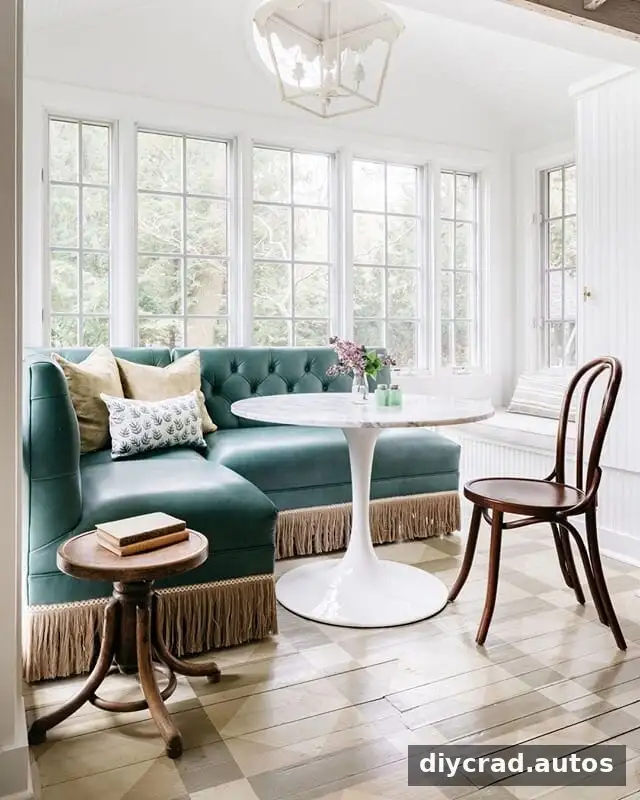
Credit: Kate Marker Interiors | Margaret Rajic
2. Use Rolling Arm Dining Chairs for Versatile Seating
Rolling chairs can make a nook more adaptable for homework, crafts, or working from home. Choose a chair that fits beneath the table and can move without obstructing the main walkway.
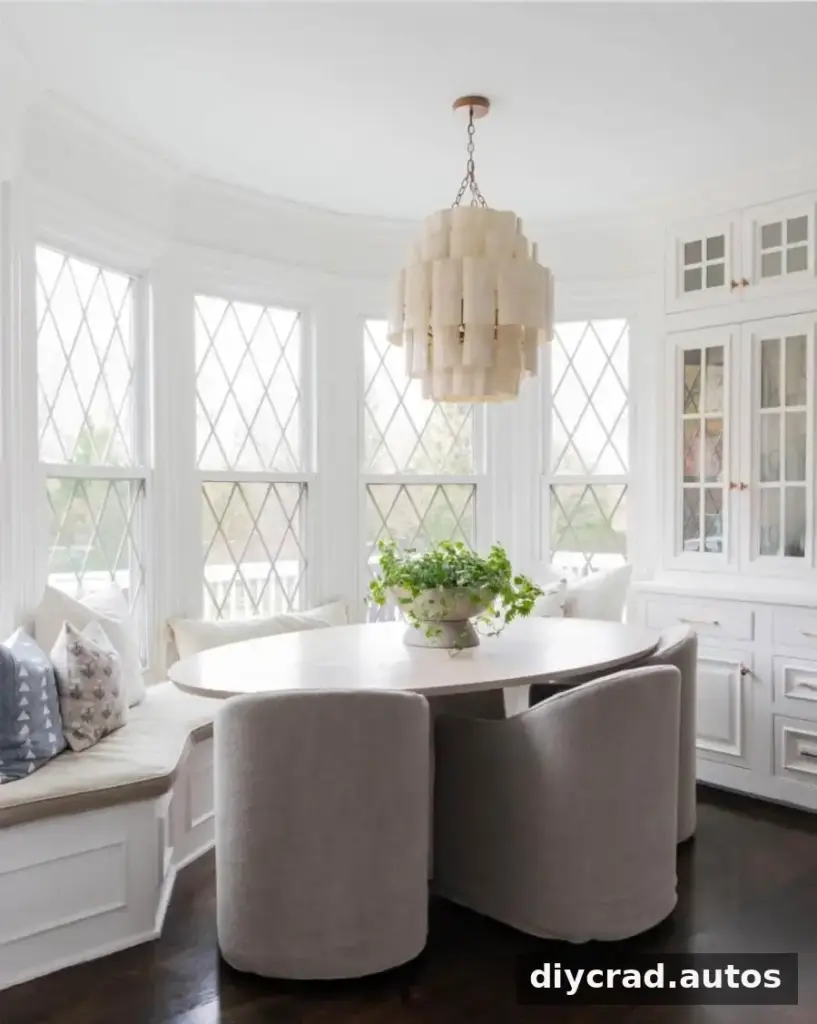
Credit: Allison Elefante | Laura Greene Interiors
3. Use a Kitchen Island as a Banquette Back
Placing a bench against a peninsula can make efficient use of an existing boundary and help define the dining area. Leave enough room for people to sit down and pass through comfortably.
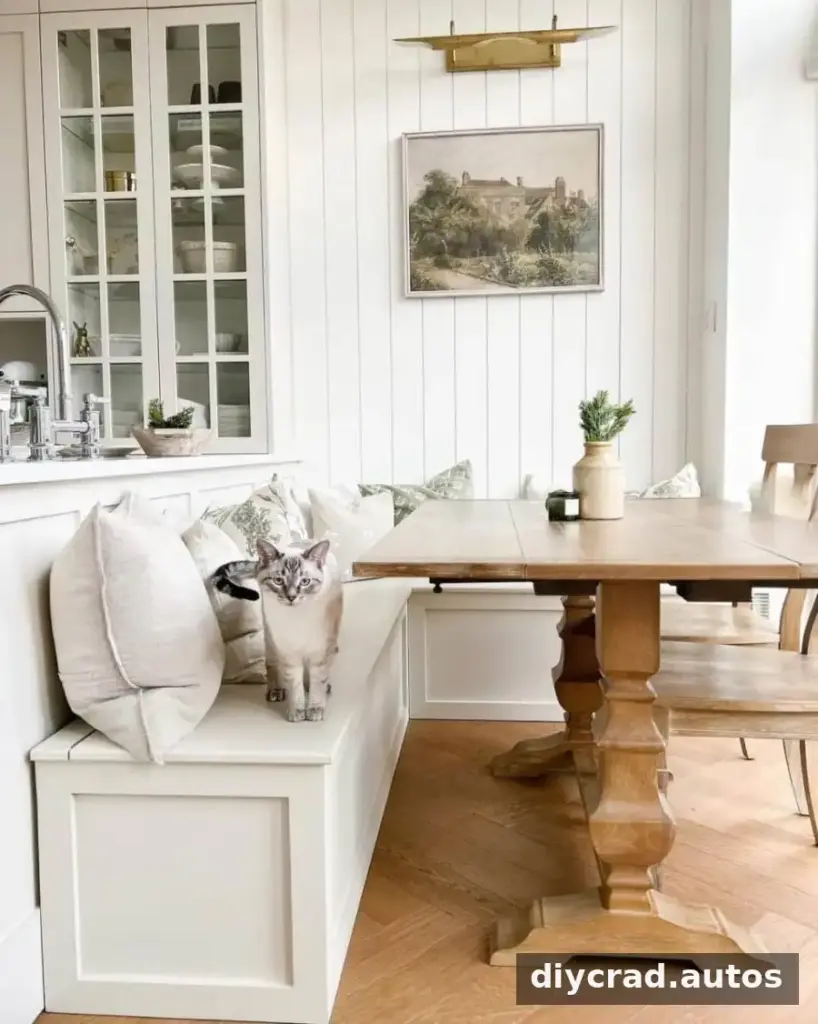
Credit: Emma Courtney Home
4. Let an Awkward Niche Provide Breakfast Nook Seating
A wall recess can be a natural place for a bench in a compact kitchen. Measure the niche carefully so the seating does not narrow nearby paths or interfere with doors and drawers.
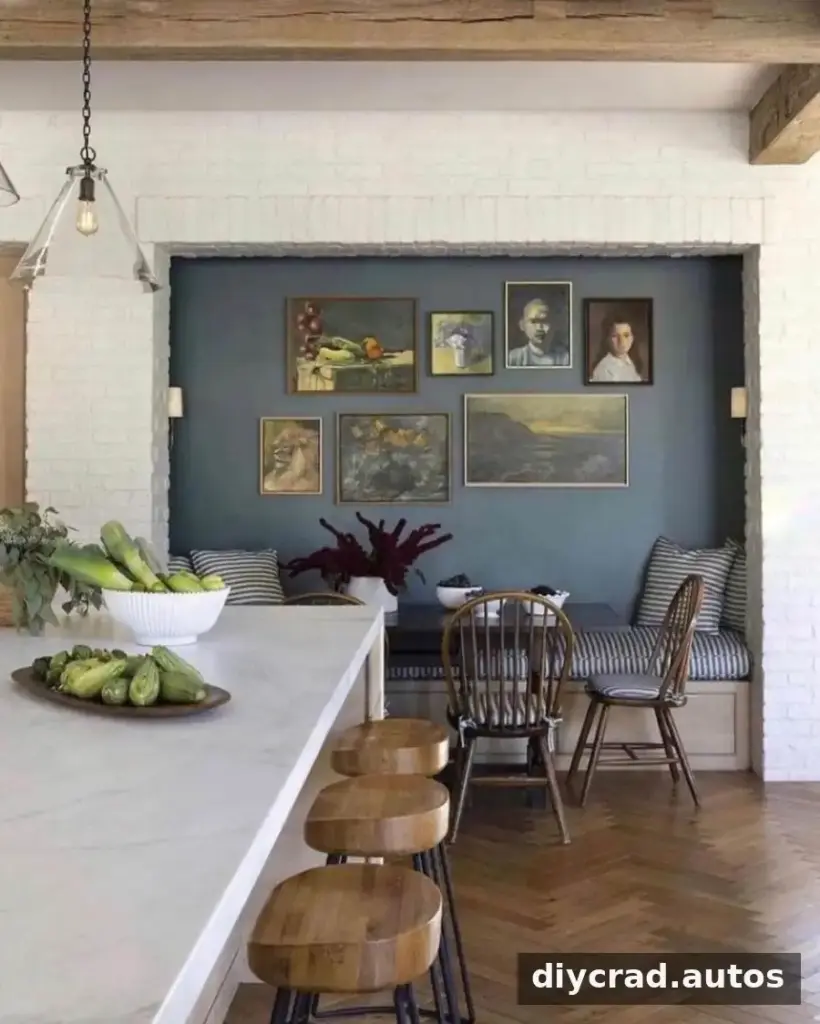
Photo: Karyn Millet | Molly Britt Design | Eric Olsen Design
5. Utilize Drawers in a Banquette
Drawers beneath a bench can keep serving pieces and dining essentials close at hand. Plan their placement so they can open fully without hitting table legs or blocking the route through the room.
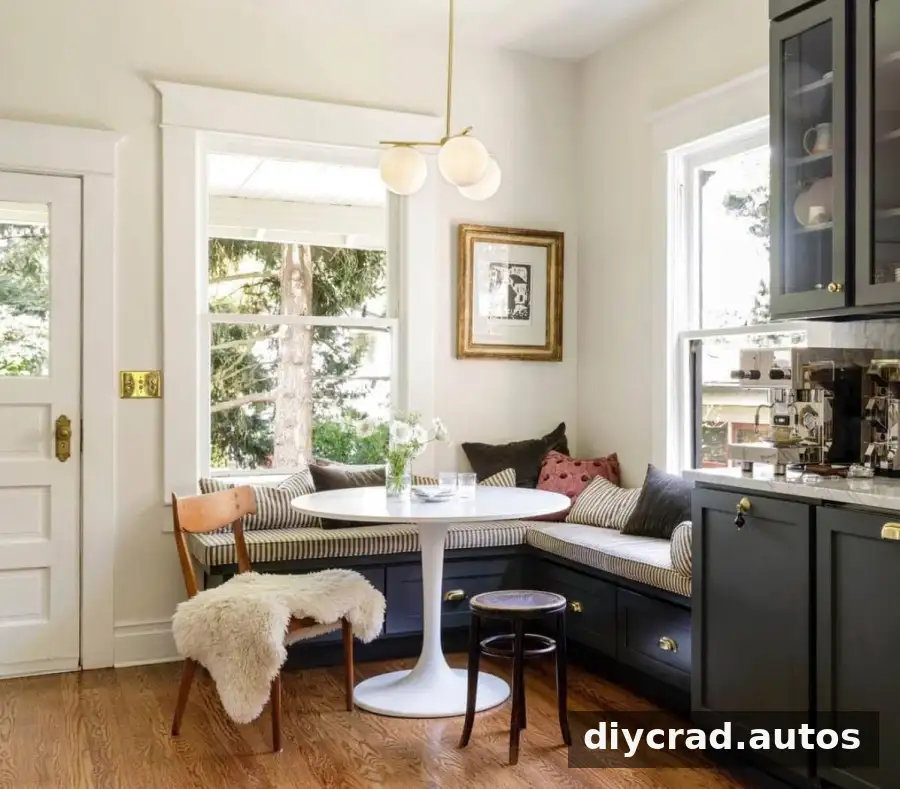
Credit: Lincoln Barbour Studio | Recast Homes
6. Add Fluting to Breakfast Nook Benches
Fluted detailing can add texture to a plain bench or cabinetry. If using a decorative surface treatment, select materials suited to the kitchen environment and easy to wipe clean.
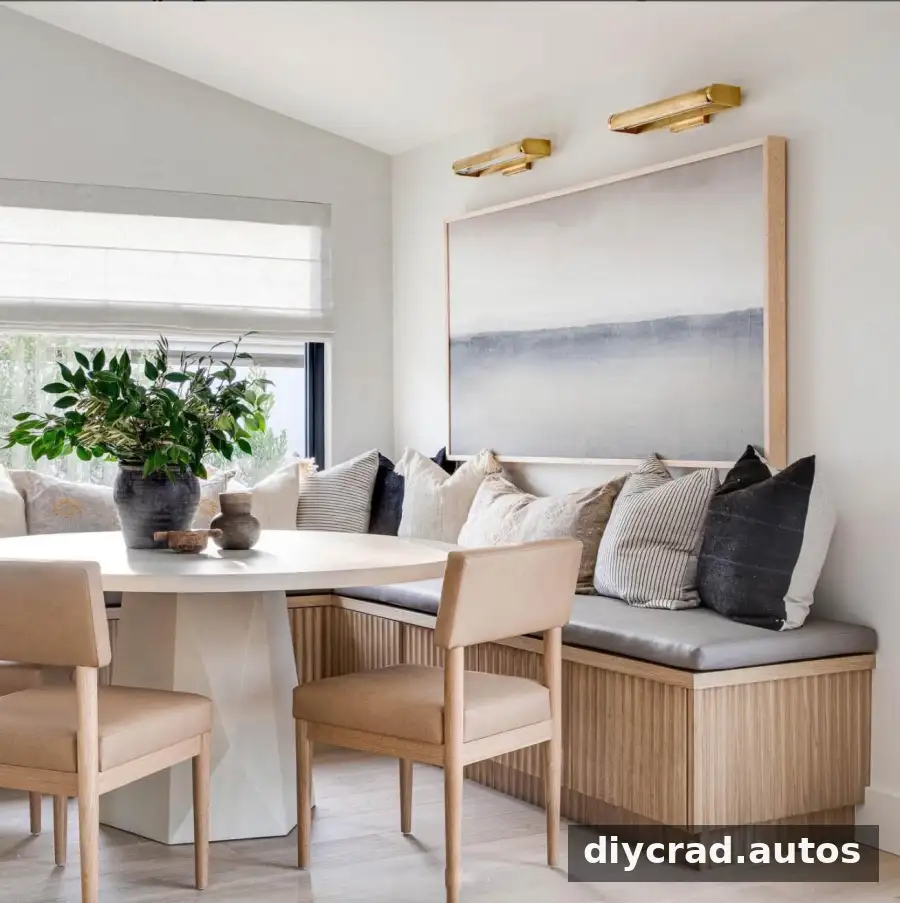
Credit: Lindye Galloway | Mellon Studio
7. Create a Gallery Wall
A collection of framed art can make a dining corner feel personal and give it a café-inspired look. Keep frames securely mounted and positioned where they are unlikely to be bumped by chairs.
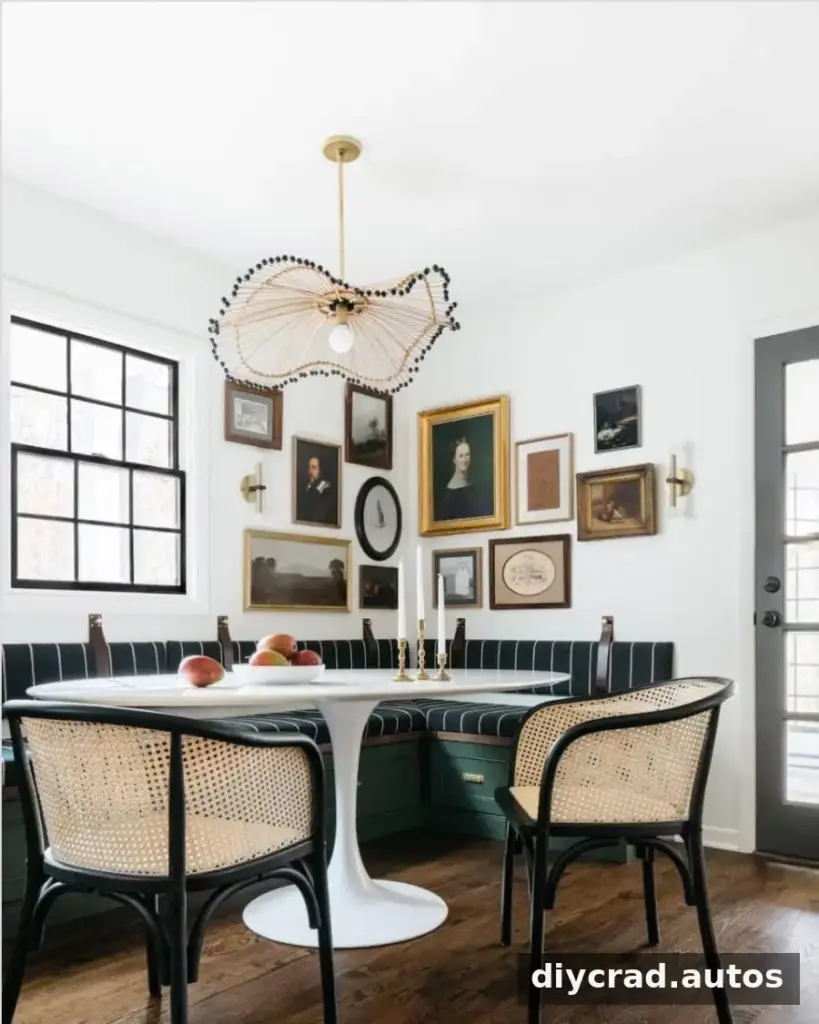
Credit: Milly Jane Studio | Margaret Rajic
8. Go Moody for an Intimate Breakfast Nook
Dark walls can create a cozy, intimate atmosphere. In a smaller or dimly lit nook, balance deep colors with suitable lighting and lighter accents to keep the space comfortable to use.
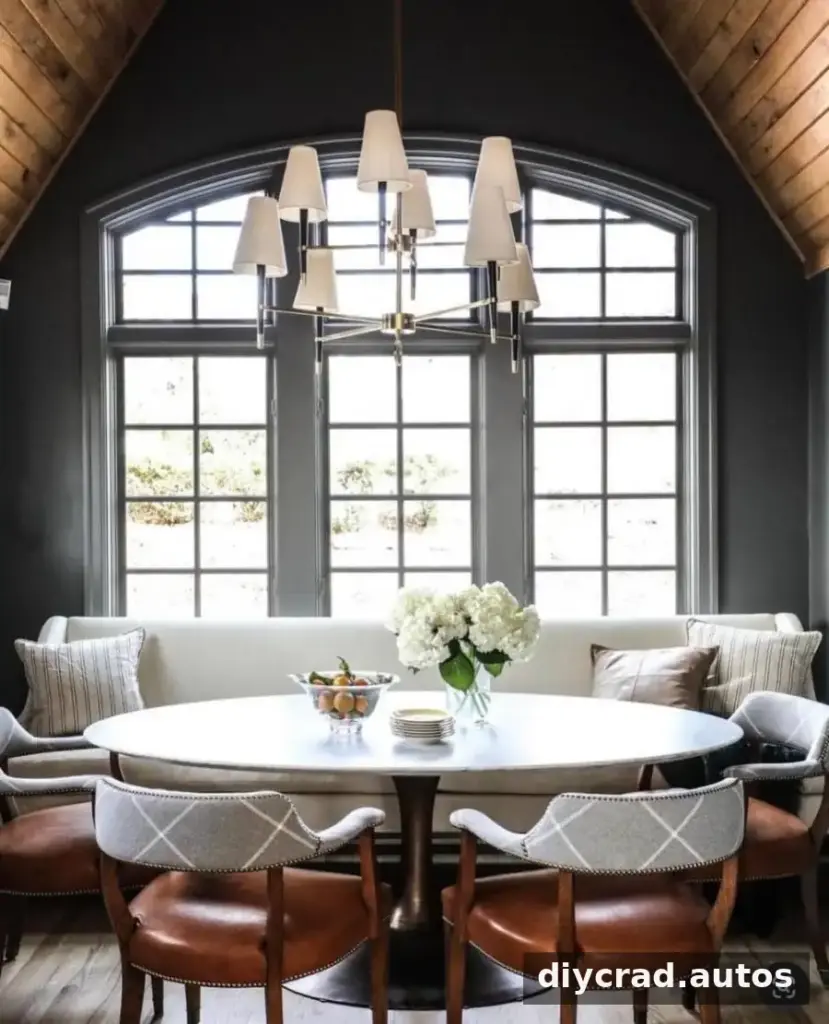
Credit: Park and Oak Design
9. Keep It Minimalist
A simple pendant and a traditional wood table can provide function and warmth without visual clutter. A restrained palette is especially useful when the nook shares space with a busy kitchen.
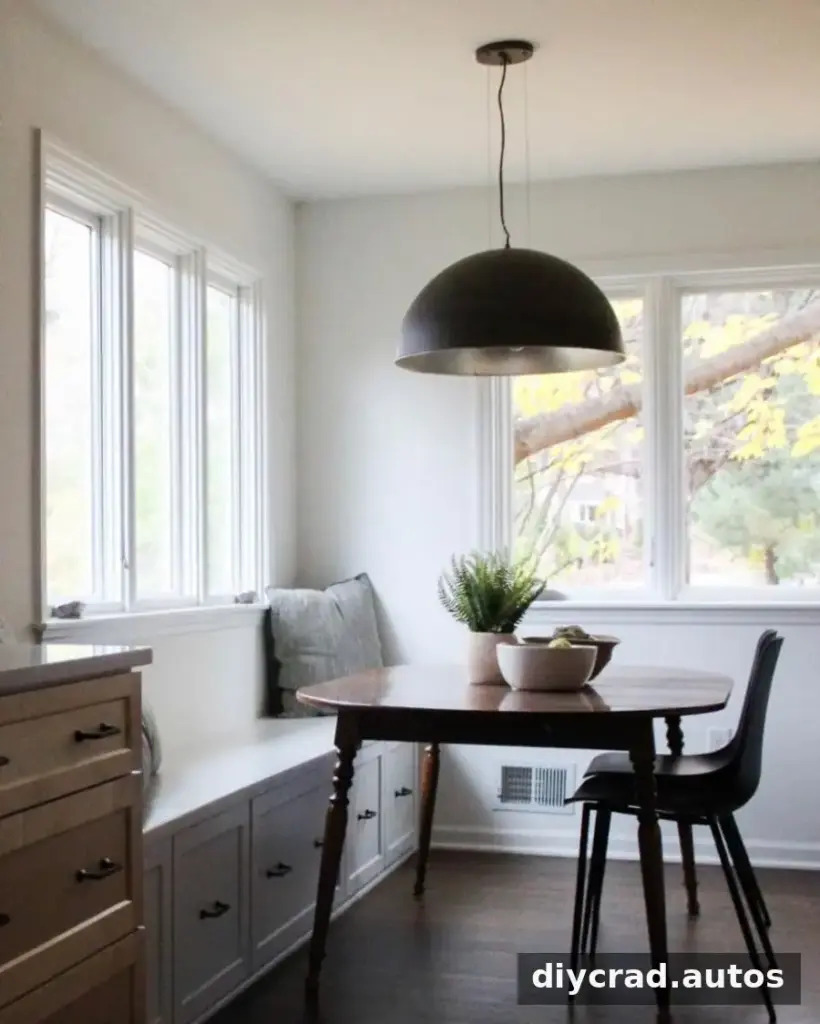
Credit: Willaby Way
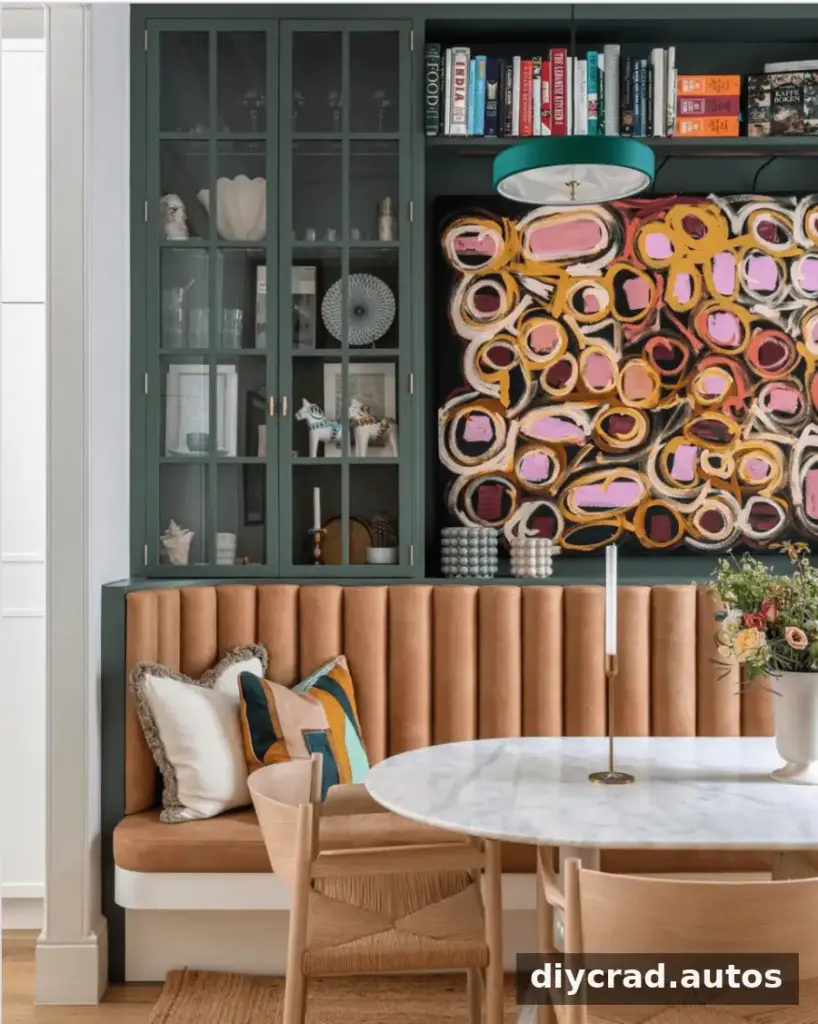
10. Build a Bench Within Cabinetry
Combining built-in seating with cabinetry can add storage and make a wall more useful. Check that the bench remains comfortable and that cabinet doors or drawers are easy to reach.
Credit: Barlow and Barlow
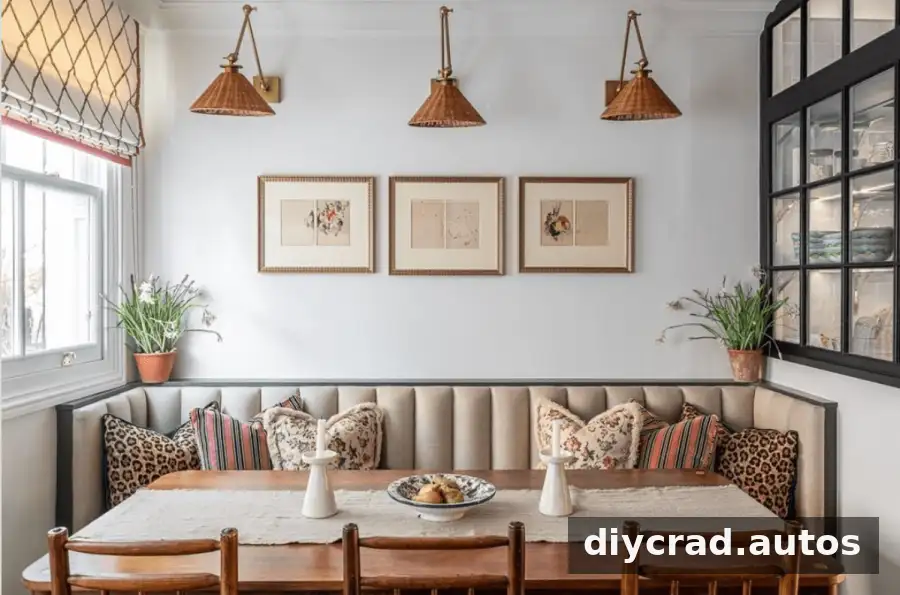
11. Span the Whole Wall with a Bench
A wall-to-wall bench can make use of otherwise unused space and provide several seats. Tailor the length to the room, while leaving enough clearance for the table and movement around it.
Credit: Barlow and Barlow
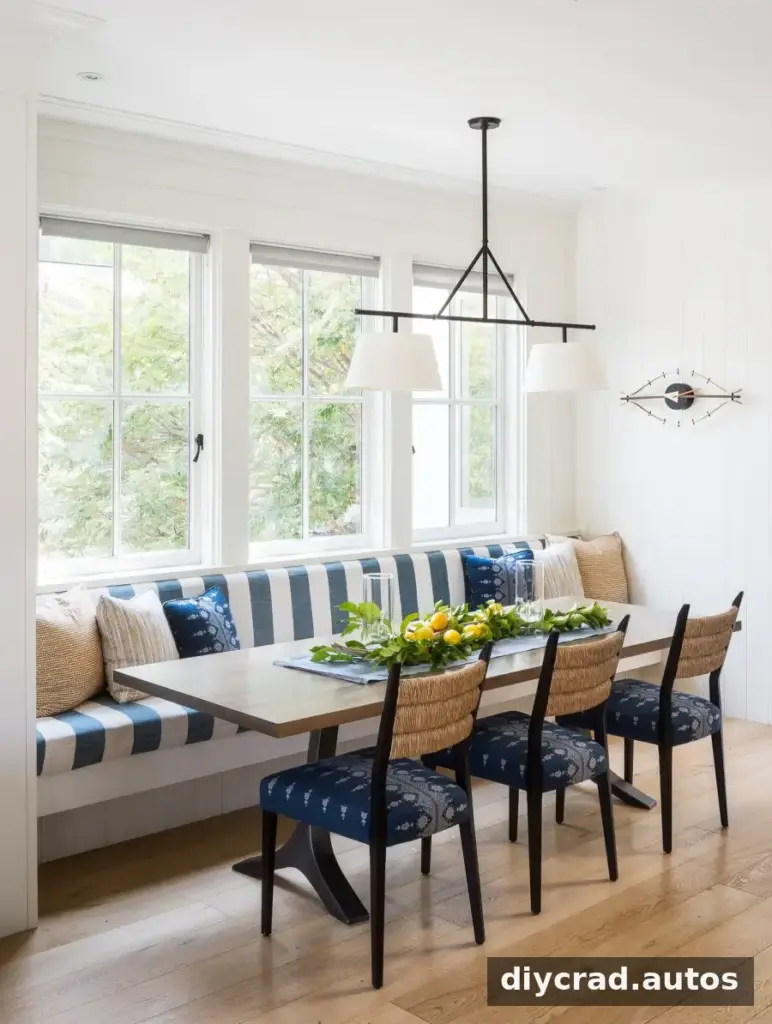
12. Take Advantage of Space Under Windows
Positioning a bench beneath a window makes use of a spot that may not suit tall furniture. Striped upholstery or cushions can add pattern; consider fade-resistant fabric if the area receives strong sunlight.
Credit: BK Interior Design | Adam Potts
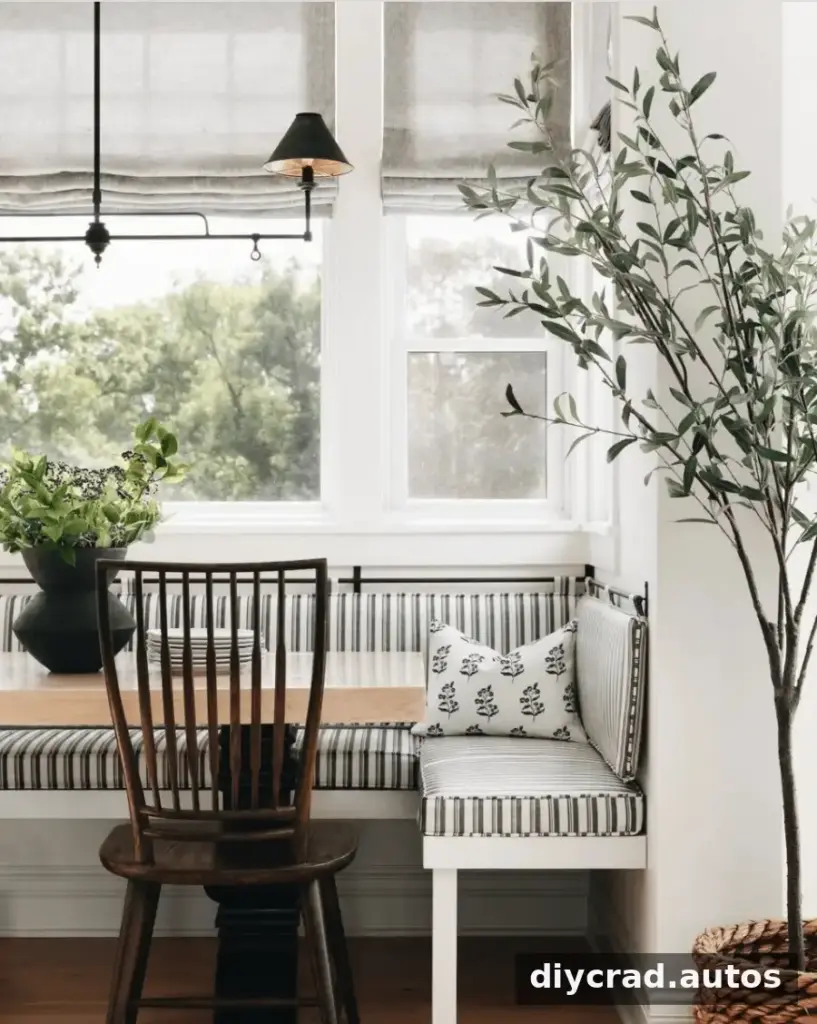
13. Mount a Bar for a Bench Back
A wall-mounted bar can support removable back cushions and create a tailored look without a fully built-in backrest. Make sure any hardware is properly secured for the wall type and intended use.
Credit: Spacecrafting Photography | Bria Hammel Interiors
14. Let Wall Molding Steal the Show
Wall molding can visually distinguish a breakfast nook from the rest of an open room. Paint or finish it in a way that suits the surrounding surfaces and can be maintained in a dining area.
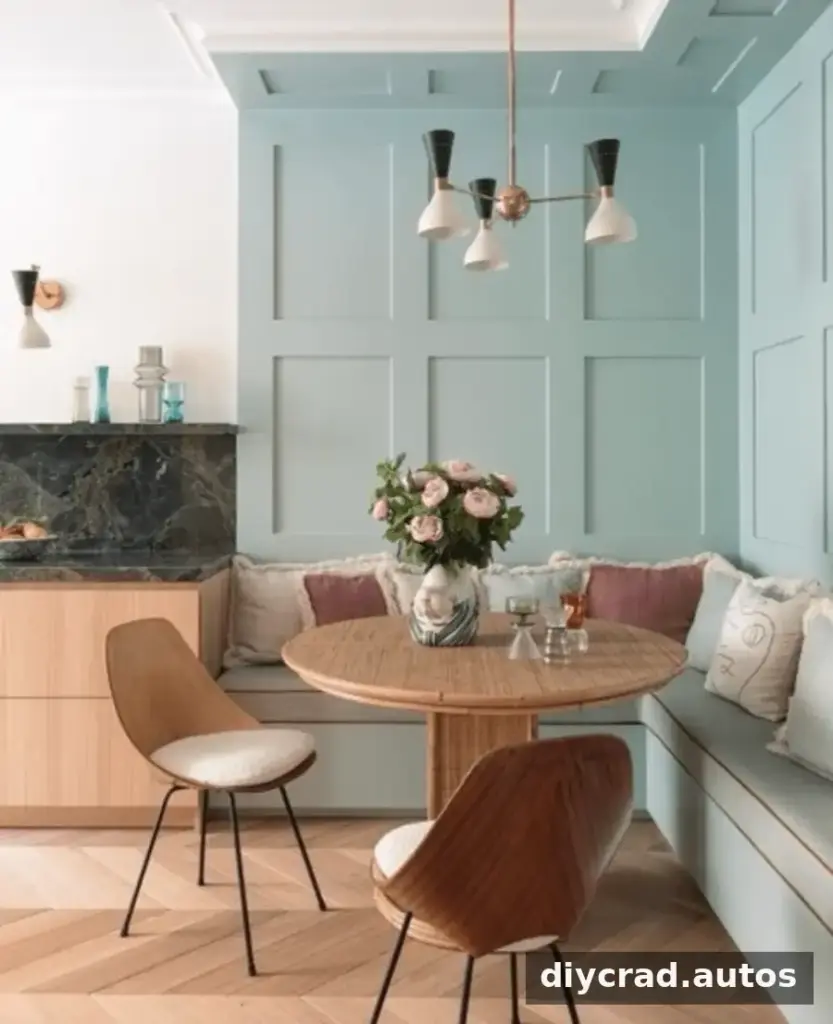
Credit: Stephan Bidoux Design | Stephan Julliard
15. Use a Nook to Prevent Blocking a Door
A bench fitted against the wall can keep seating out of a doorway’s path. Check the door’s full swing and maintain a clear route before settling on the table position.
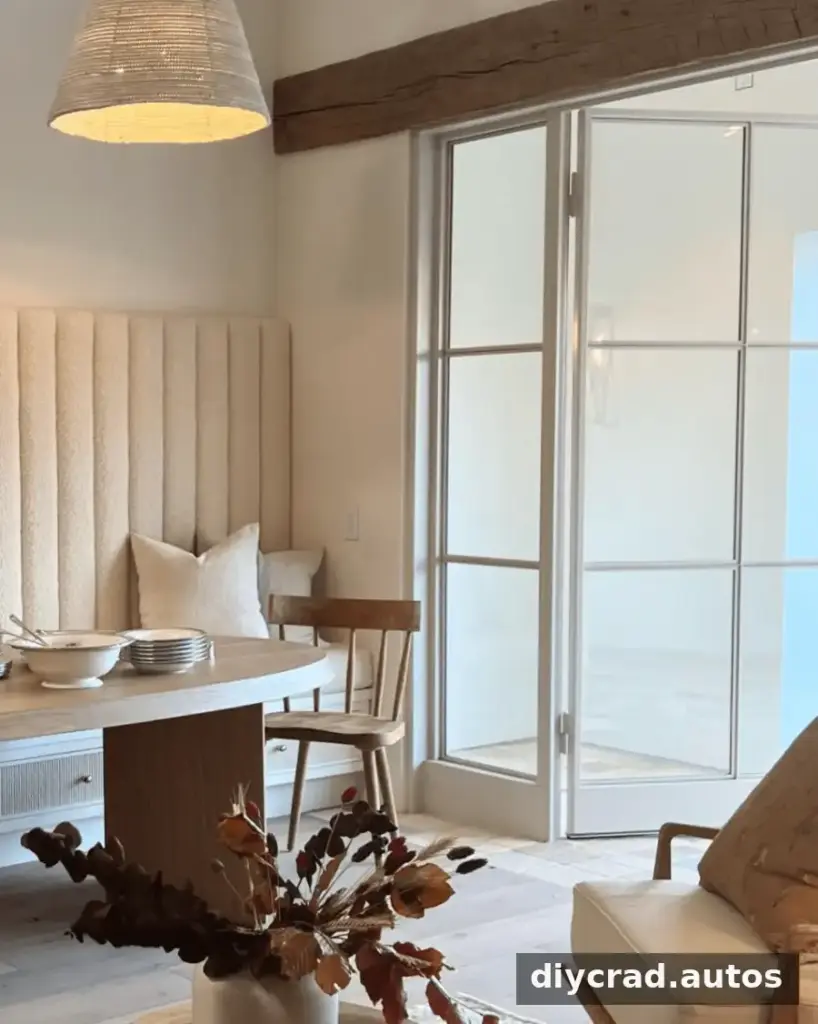
Credit: Intimate Living Interiors |
16. Go for Small but Mighty
A compact table can still feel intentional when paired with distinctive furnishings or a well-chosen light fixture. Keep the tabletop size practical for the number of people who will use it regularly.
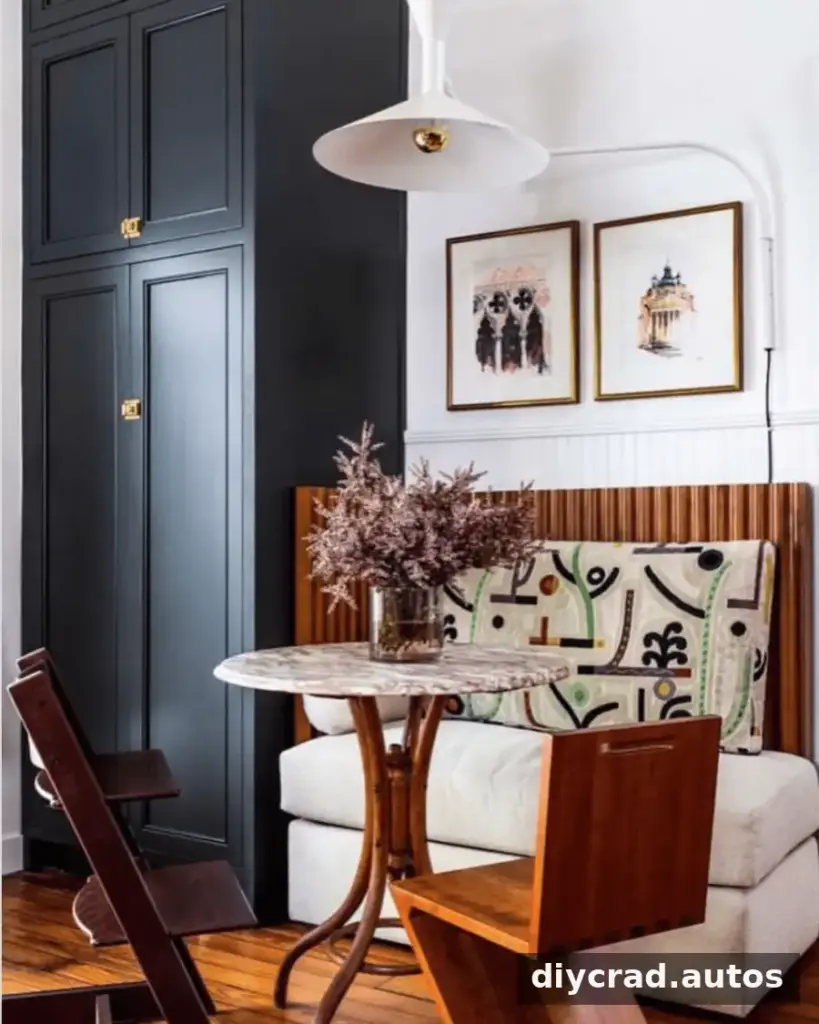
Credit: Jeff Herr Photo | Laura W Jenkins Interiors
17. Use Walls to Define a Breakfast Nook Space
Walls can give a dining area a sense of separation and make it feel like its own room. In a smaller home, consider how the enclosure affects natural light and access to the kitchen.
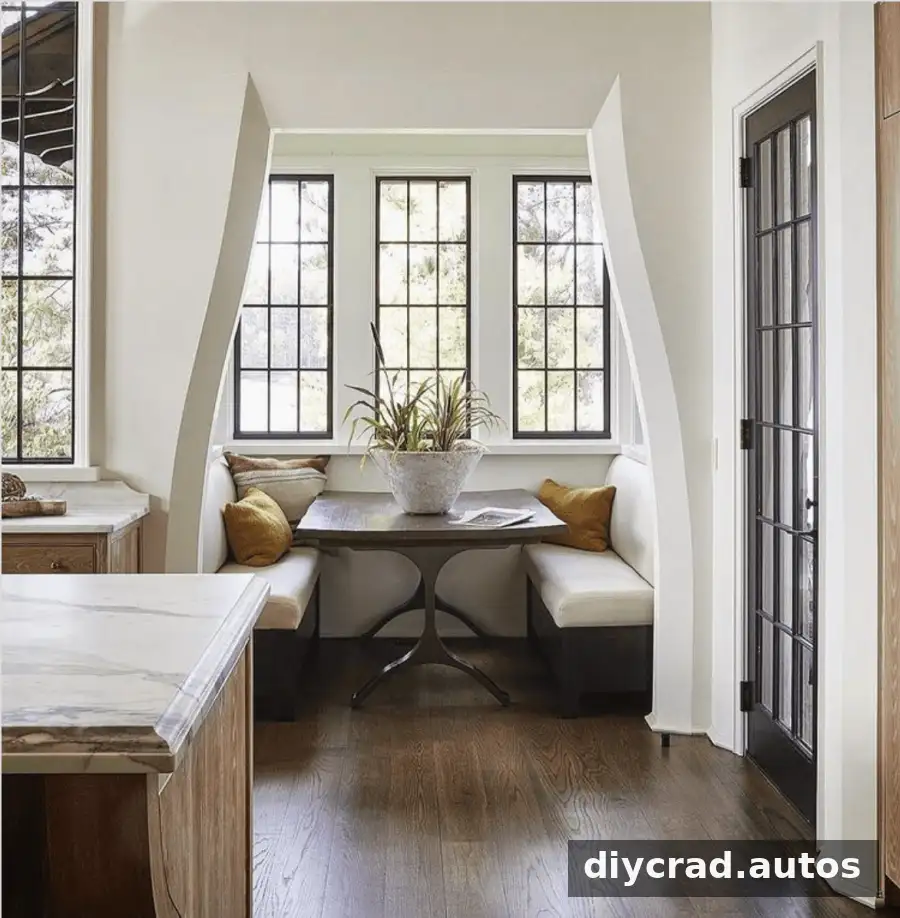
Credit: Spark Interiors | Jeffrey Dungan
18. Use Stand-Alone Banquettes
Freestanding benches can be moved or repurposed more easily than built-ins. This can be a useful choice if the room’s function may change, such as becoming a sitting area or home office.
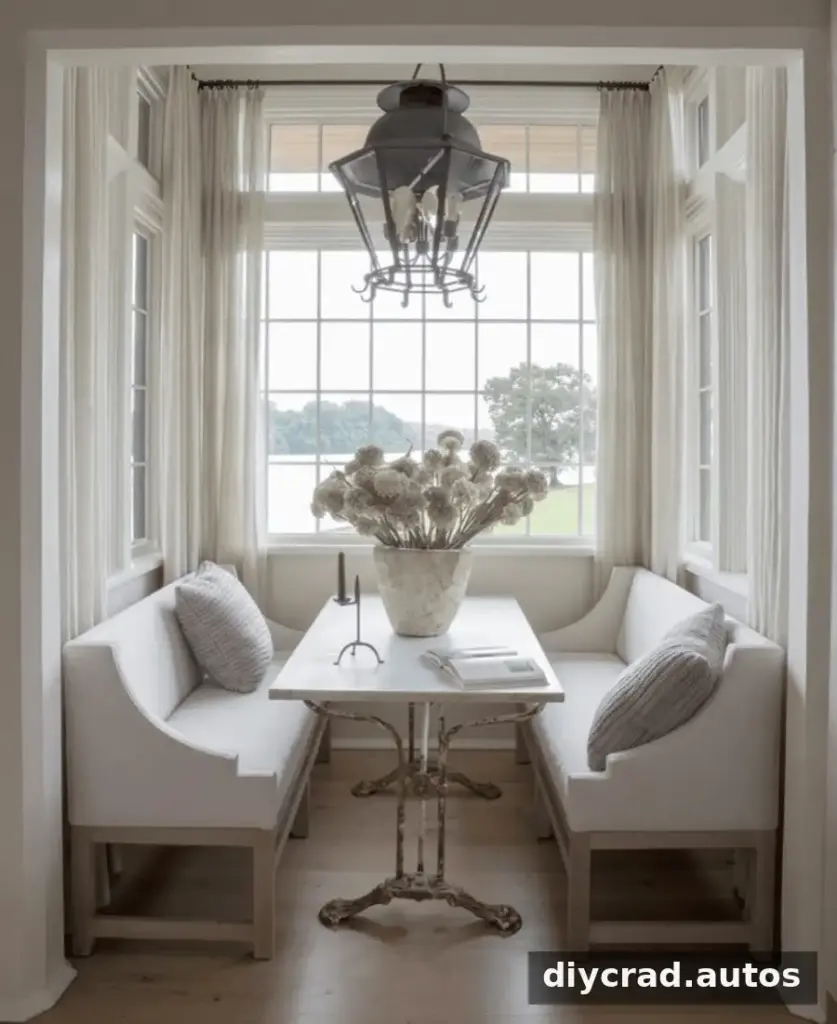
Credit: Jeffrey Dungan
19. Add Wood to the Ceiling
Wood overhead brings warmth and texture to a dining nook. Use a finish that relates to other materials in the kitchen so the feature feels connected to the overall space.
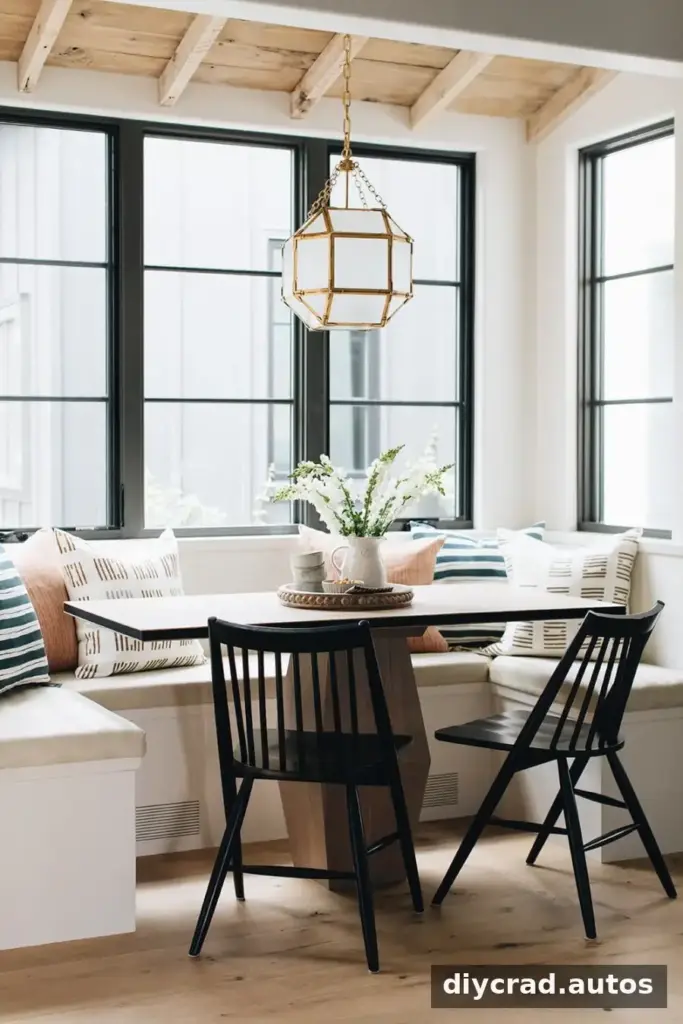
Credit: Kate Marker Interiors | Margaret Rajic
20. Oversize the Lighting
A larger light fixture can make the nook a focal point, but it should suit the table and allow people to see one another comfortably. Check ceiling height and fixture placement before installation.
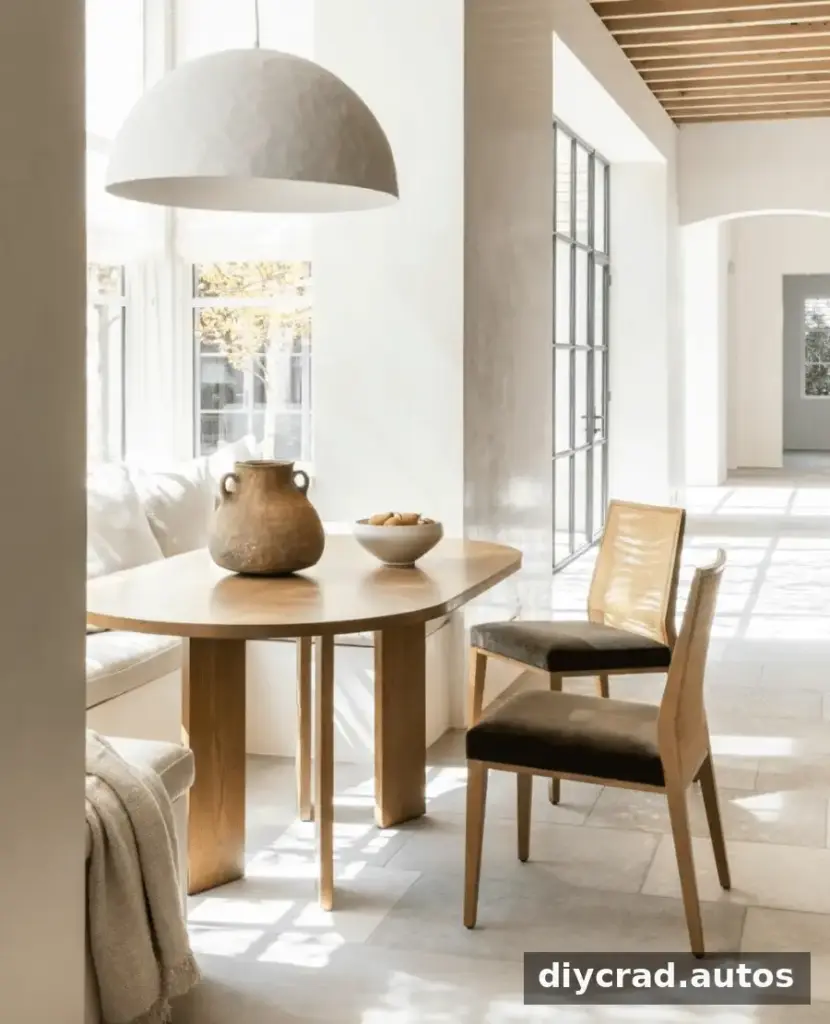
Credit: Marie Flanigan Interiors
21. Slipcover the Bench
A removable bench cover is convenient when food or drink spills happen. Look for washable or stain-resistant fabric, and confirm that the cover stays securely in place during everyday use.
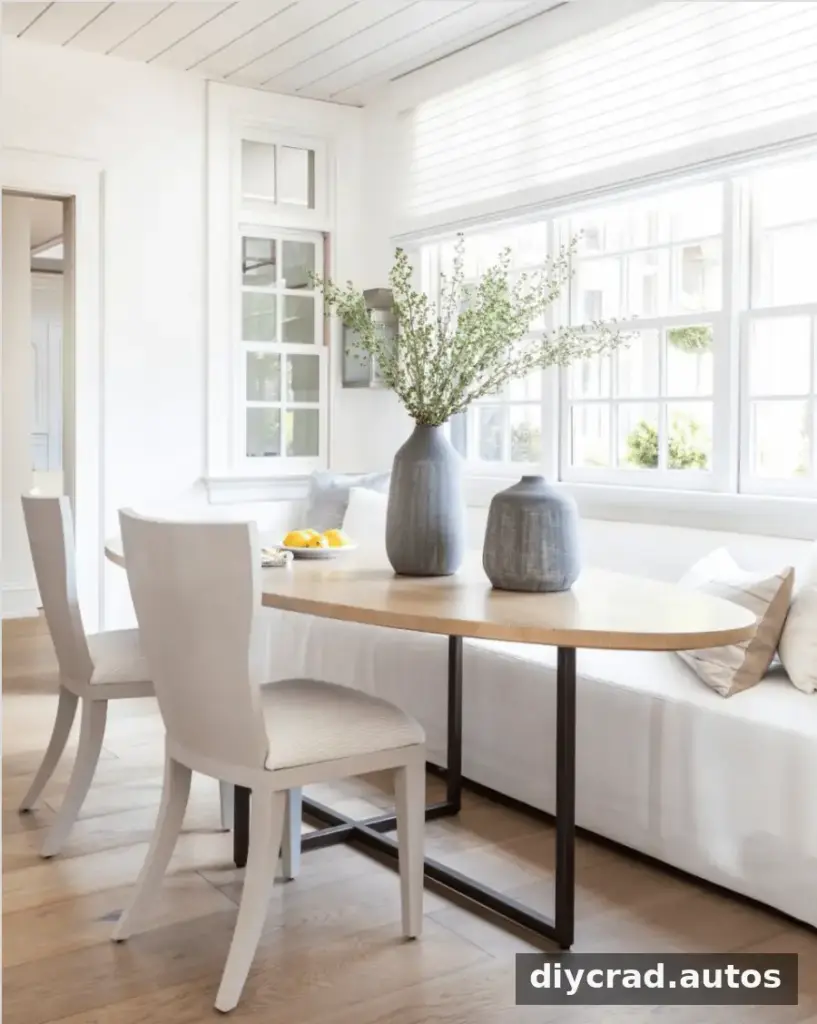
Credit: Marie Flanigan Interiors
22. Float Your Breakfast Nook Bench to Create Space
A wall-supported bench can leave the floor beneath it more open and visually light. Any mounted seating needs suitable structural support and professional installation where required.
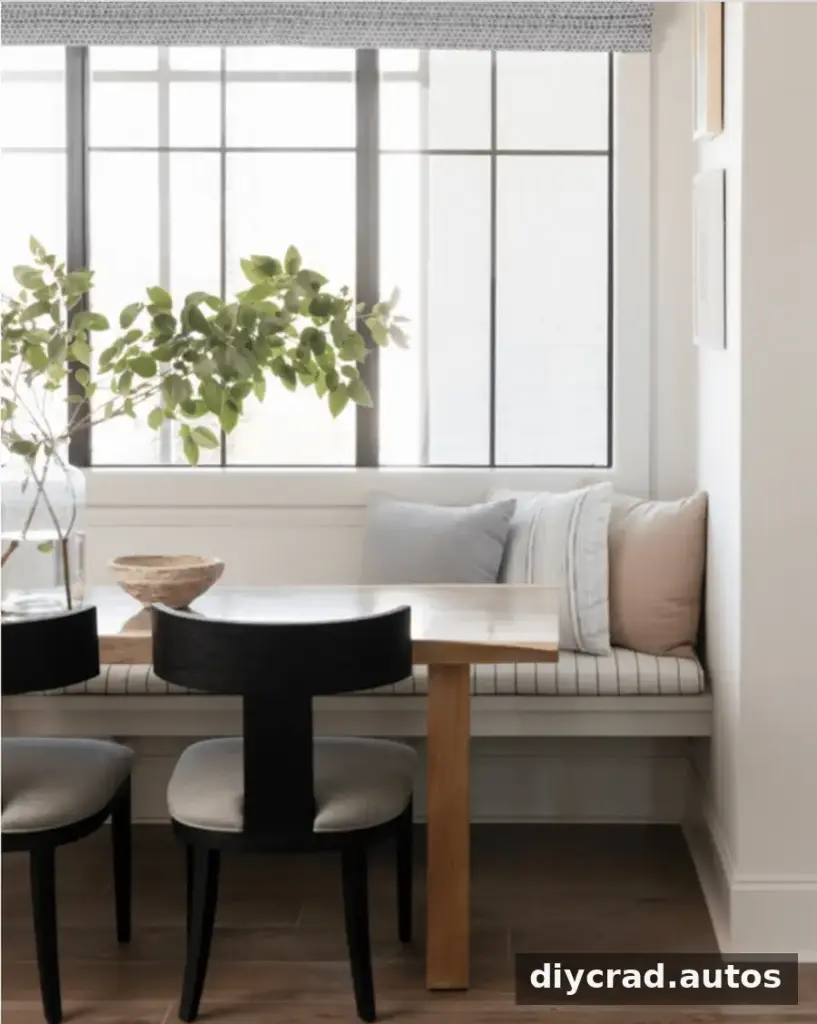
Credit: Melanie Bryant Interiors | Robby Followell
23. Create Whimsy with a Patterned Floor
A patterned floor adds character without relying on decorated walls. Choose a surface appropriate for a kitchen, where crumbs and spills make easy cleaning an important consideration.
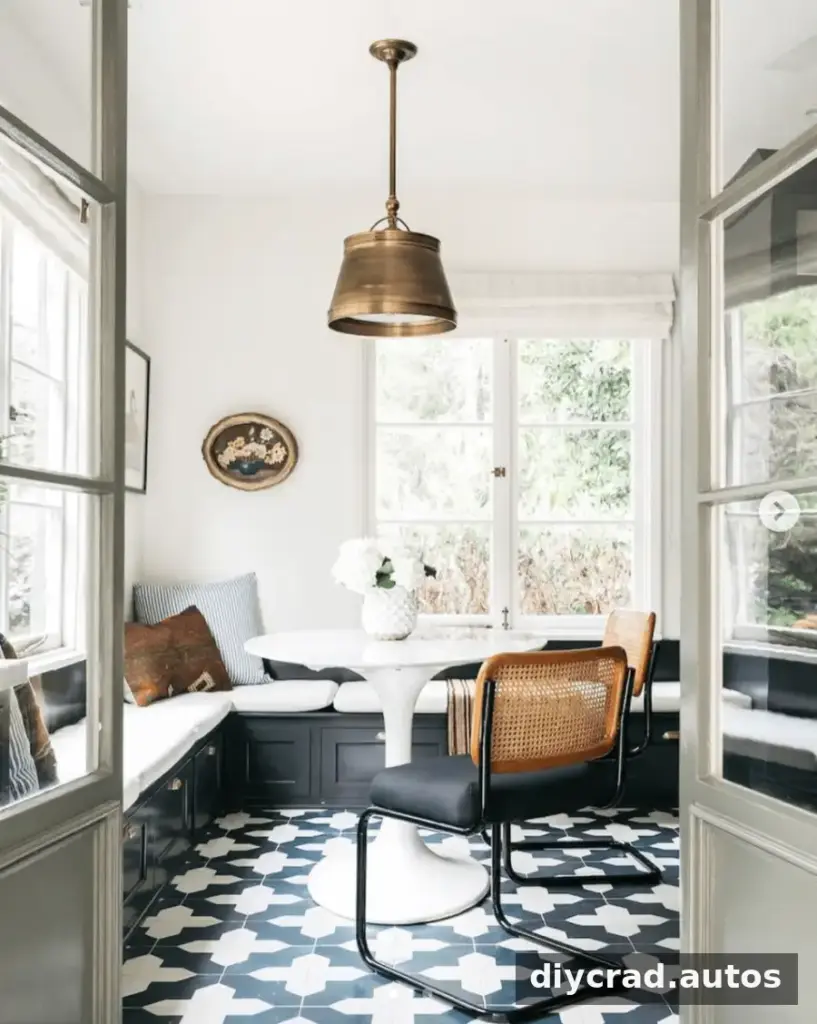
Credit: Meredith K Design
24. Add Character with Beadboard
Beadboard can lend a cottage feel and provide a defined surface behind a bench. A durable, cleanable finish helps it stand up to scuffs in a frequently used dining spot.
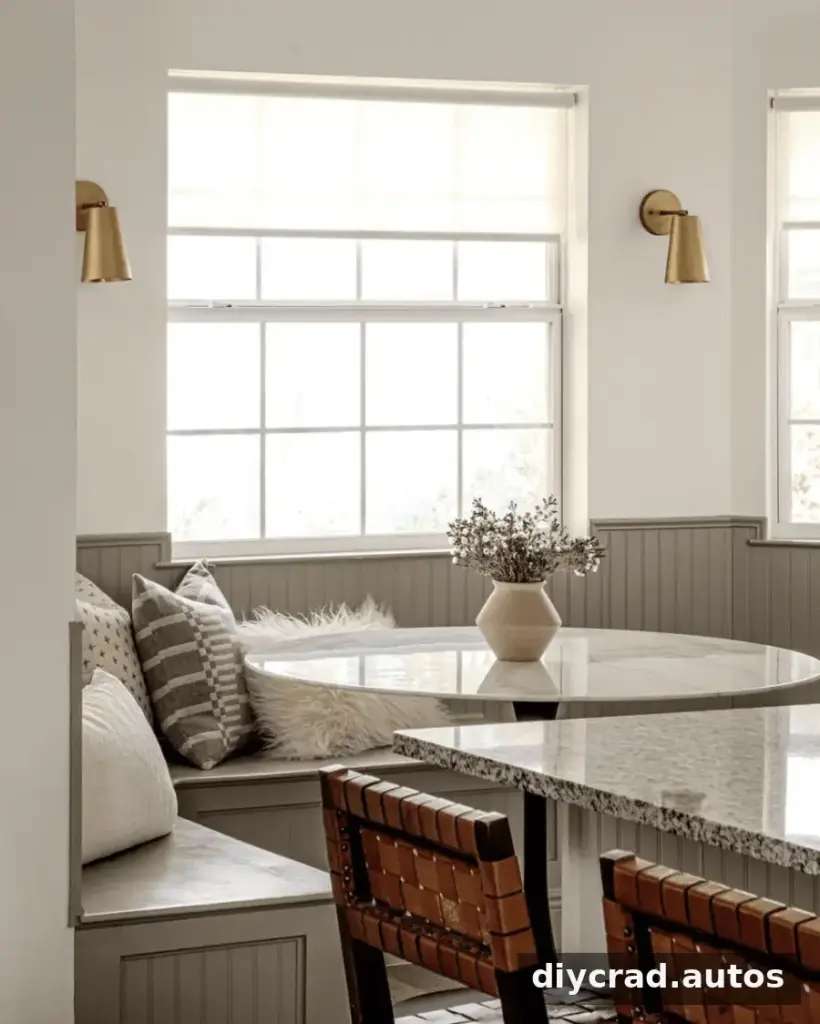
Credit: Nested Interior Design | Camera & Flask
25. Nestle Next to a Bookshelf
A nearby bookshelf keeps cookbooks within easy reach and can add useful storage. Avoid placing frequently used items where they make the seating area feel crowded.
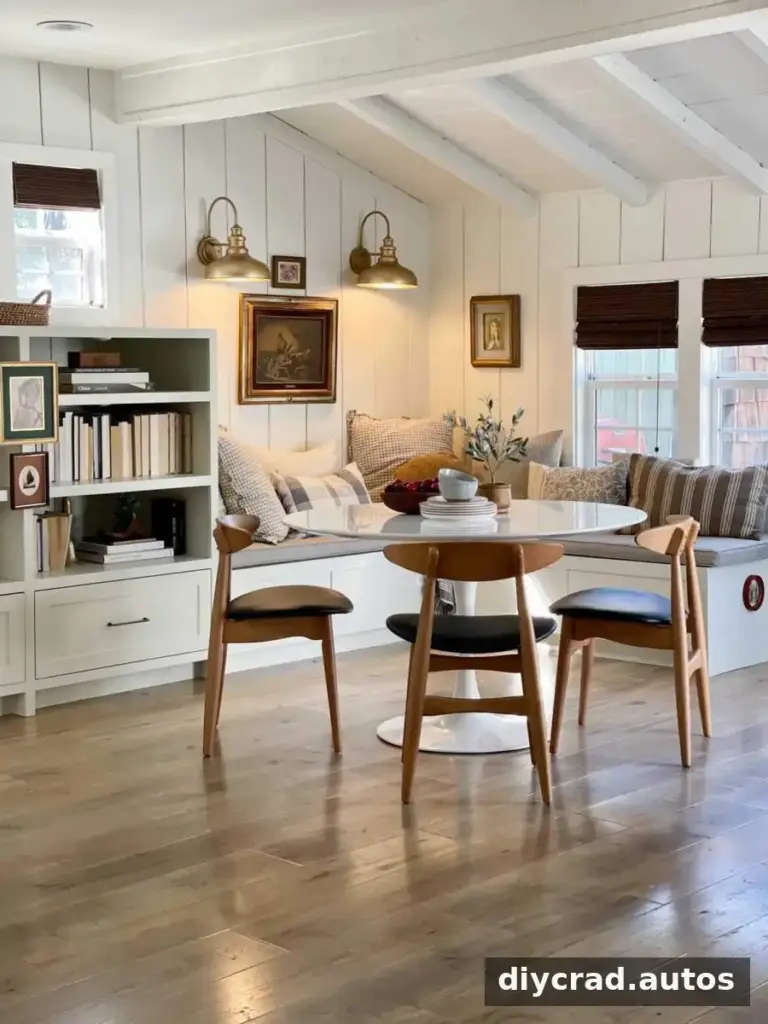
Credit: Pretty On Fridays
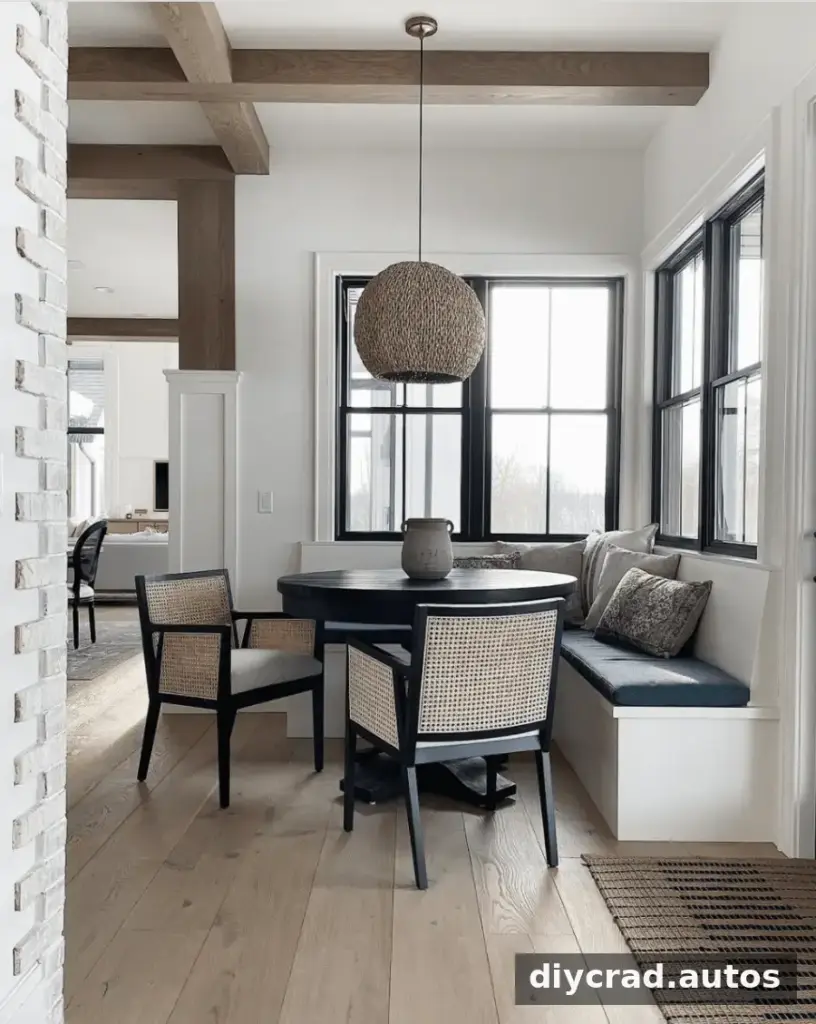
26. Use a Round Table to Help Traffic Flow
A round table has no projecting corners, which can make it easier to move around in a tight nook. Compare the table’s footprint with the available chair and bench space before choosing one.
Credit: Shalmai Designs
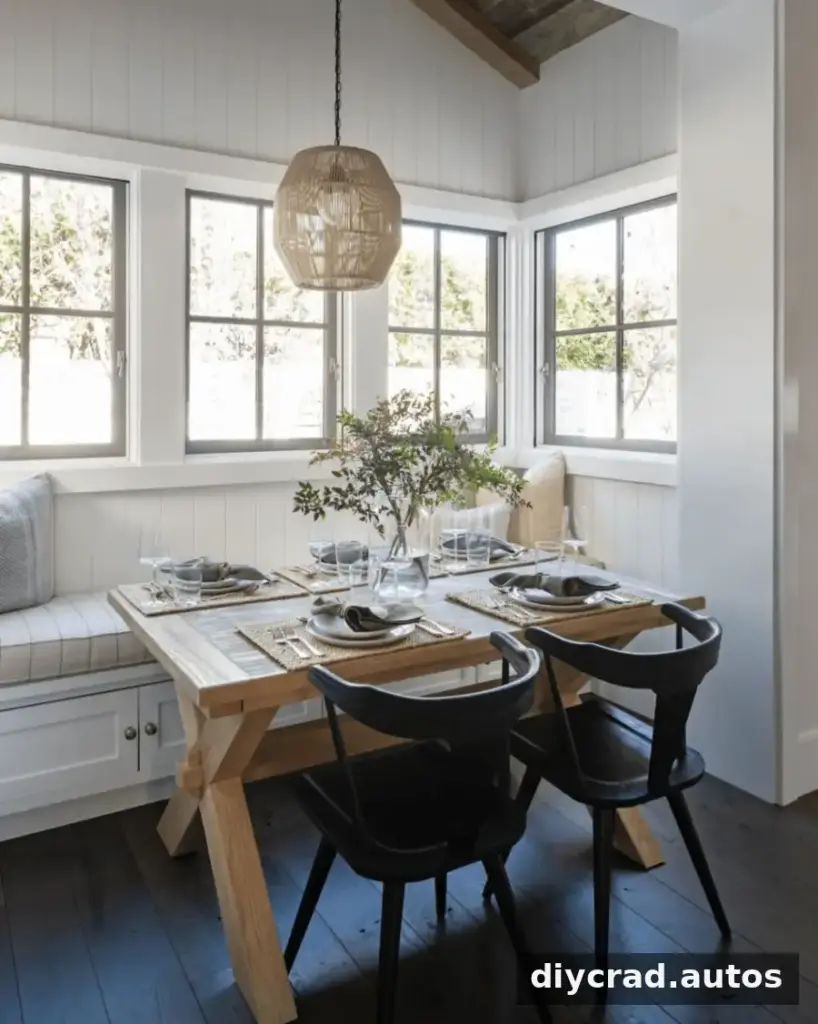
27. Add Cabinet Doors to the Banquette
Cabinet doors can make storage beneath a bench easier to access than a lift-up seat, particularly when cushions are in place. Make sure doors can open without colliding with the table or nearby furniture.
Credit: Shannon Kate Designs | Lane Dittoe
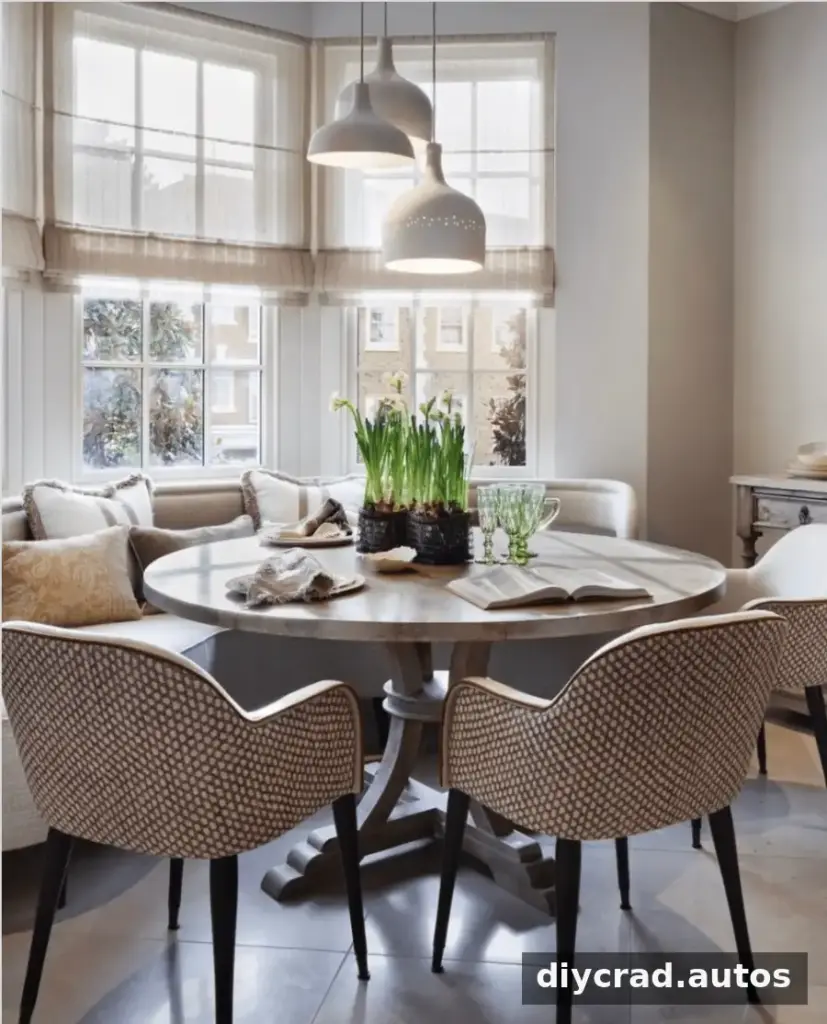
28. Take Advantage of a Bay Window
A curved bench can follow the shape of a bay window and turn the area into a distinctive dining spot. Roman shades offer window coverage without the bulk of long curtains near the seating.
Credit: Louise Bradley Interiors
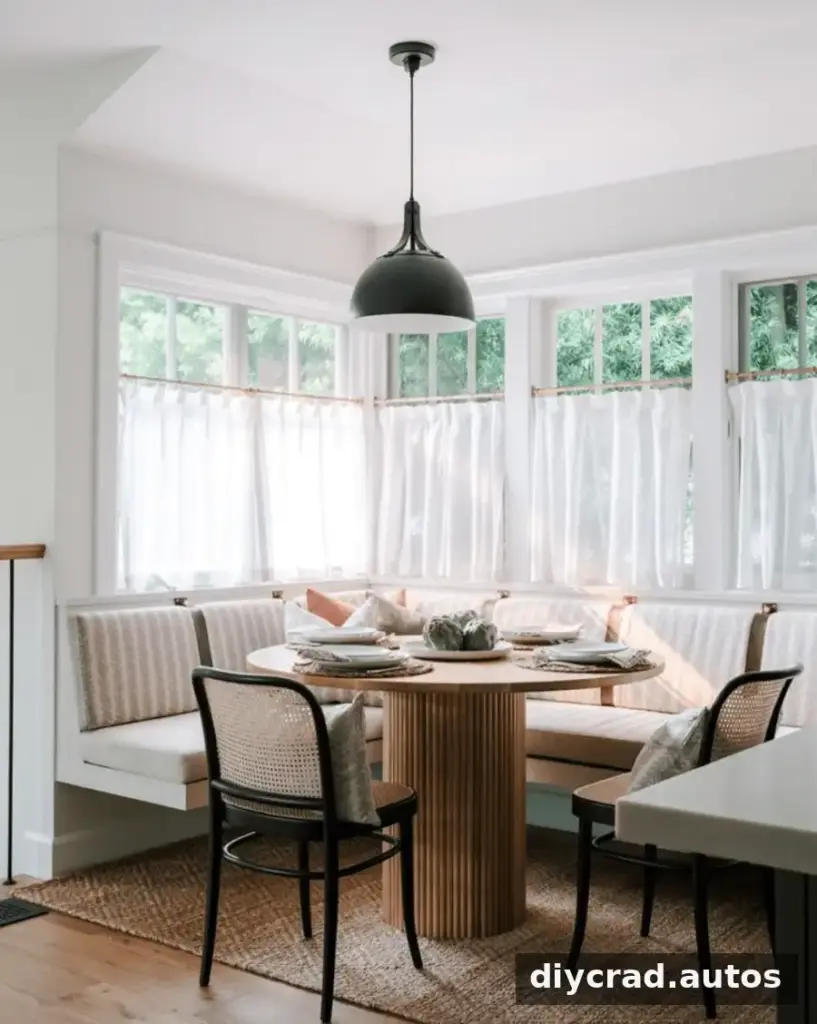
29. Use Cafe Curtains
Café curtains bring a vintage touch while leaving some daylight visible through the upper part of a window. Choose a length that does not interfere with the table or seating.
Credit: Lynden Lane | Stetten Wilson
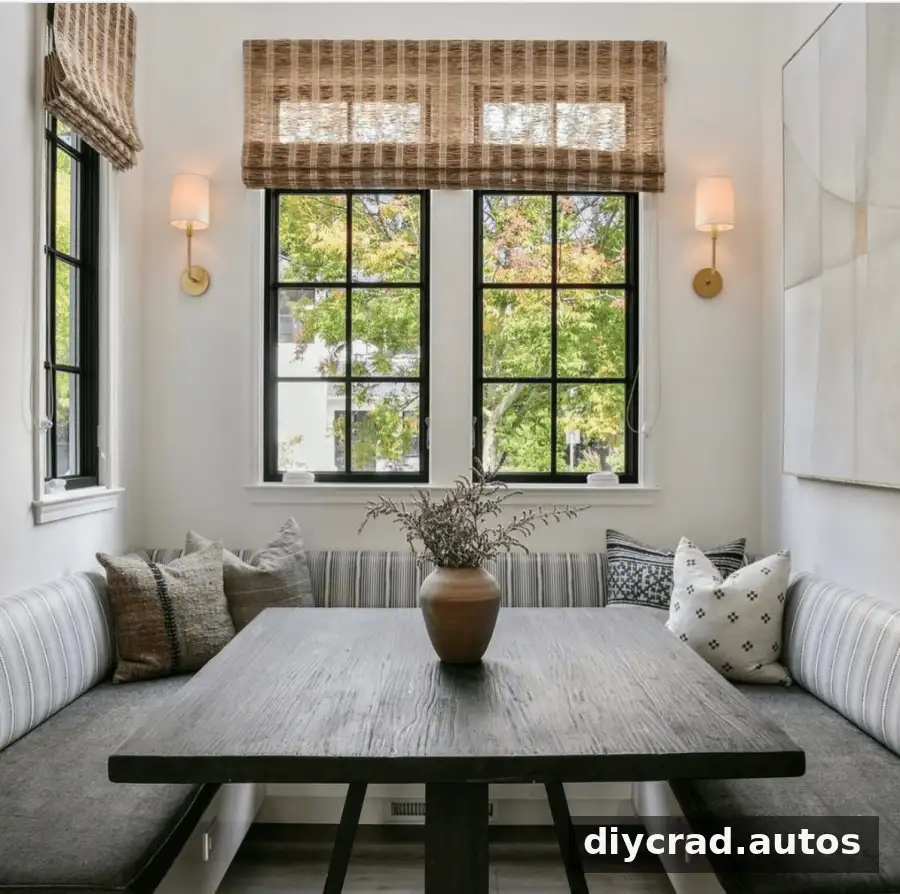
30. Embrace the U Shape
A U-shaped built-in banquette can provide seating along three sides of a compact area. Measure carefully to ensure the table fits and each seat remains easy to enter and leave.
Choosing the Right Breakfast Nook Ideas for Your Home
The best design depends on how the space will be used, how many people need to sit there, and what the surrounding layout allows. Start with measurements, then compare table shapes, seating options, storage access, lighting, and materials that are practical for daily meals.
Whether the goal is a flexible dining corner or a permanent built-in banquette, these breakfast nook ideas show how a small area can become both useful and welcoming. Prioritize clear walkways and comfortable access, then add personal touches such as artwork, patterned textiles, or warm finishes.

- DIY Built In Cabinets and Window Seat
- 7 Ways to Refresh a Dining Nook in a Flash
- DIY Window Seat From a Kitchen Cabinet
- Breakfast Nook Refresh Reveal

