
A closet cleanout can make it easier to find clothes you enjoy wearing and create space for the items that suit your life now. Instead of relying on a vague question like “Does this spark joy?”, use a clear process and a few practical decision prompts to sort your wardrobe one item at a time.
Closet cleanout: start with a manageable plan
Sorting an entire wardrobe can feel overwhelming, especially when clothes reflect different seasons, sizes, or stages of life. Begin with one section, such as hanging clothes, folded tops, or shoes. Working in smaller groups helps you make thoughtful choices without turning the whole room into a project at once.
Before you start, set aside a clear surface and prepare separate places for items to keep, donate, repair, or discard. If you are short on time, choose a specific stopping point, such as one drawer or one rail. You can continue another day without losing track of your progress.

A dedicated sorting area can help keep the process organized. Keep only the items you are currently reviewing in that space, and return each finished group to its designated pile or container.

Use simple questions to decide what stays
For each piece of clothing, consider how well it fits, whether it is comfortable, and whether it suits your current routine. Think about when you last wore it and whether you would choose it again if it were clean and ready to wear. These questions can make decisions more concrete than keeping an item simply because it might be useful someday.
- Keep: Clothes that fit, are in wearable condition, and work for your everyday needs or special occasions.
- Repair: Items you genuinely want to wear but that need a straightforward fix, such as a missing button.
- Donate or pass along: Clean, wearable pieces that no longer suit you but may be useful to someone else.
- Discard or recycle: Items that are too damaged or worn to be used as clothing. Check local textile recycling options where available.
For uncertain items, place them in a separate “review later” group rather than letting them drift back into the closet. Revisit that group after you have sorted the rest. If you still cannot identify a realistic occasion or reason to keep an item, that may help clarify your choice.

Make room for changes in fit and lifestyle
Wardrobes often contain clothes from different seasons of life, including items kept for a possible future need. Bodies, work routines, and personal preferences can change, so assess clothing based on what is comfortable and useful now. There is no need to keep pieces that make getting dressed more difficult simply because they were once a favorite.
For clothes that do not fit at present, decide deliberately whether keeping them supports a realistic plan. If you choose to store them, give them a defined place and review them later. Avoid letting “just in case” become the default reason for keeping every item.
Organize what you keep
Once sorting is complete, return the keepers in a way that makes daily choices easier. Group similar items together, such as workwear, casual tops, or seasonal layers. Put frequently worn clothes where they are easy to reach, and store occasional or out-of-season pieces elsewhere if space allows.
Check that you have enough hangers and storage space before putting everything away. If the closet is still crowded, review the items you kept rather than buying more organizers immediately. A simple checklist can also help you work through each category consistently and track what remains.
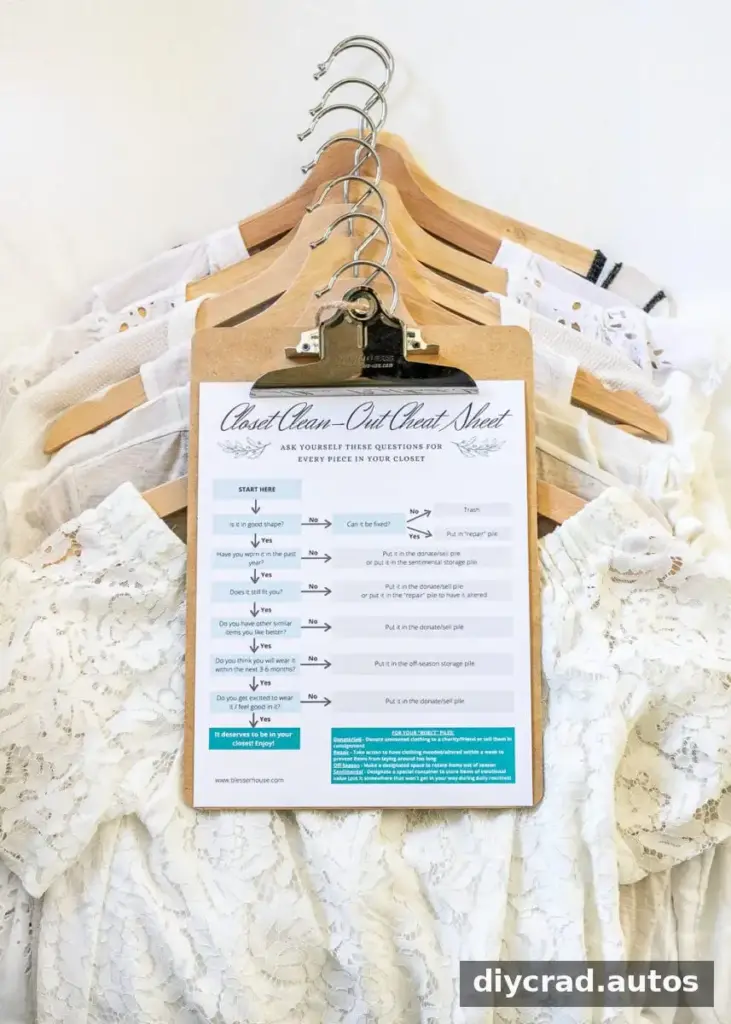
A written list of categories and decision questions can serve as a practical guide during the process. Keep it nearby and use the same criteria for each group, while allowing yourself to make individual choices based on fit, condition, and actual use.

Keep the process realistic
A closet cleanout does not have to look perfectly tidy while it is underway. Sorting can temporarily create piles, particularly when several categories are being reviewed. To keep the room usable, finish one section at a time and remove donation or discard items from the work area when you can.

If the space becomes messy, pause and put away the completed groups before moving on. A short reset can make it easier to see what still needs attention.

After the initial sort, notice which clothes you reach for most often and which remain untouched. That information can guide future decisions and help you maintain a wardrobe that reflects your current needs.
Conclusion: a closet cleanout that works for you
A useful closet cleanout is less about following a perfect rule and more about making clear, practical decisions. Sort in manageable sections, consider fit and condition, and keep clothes that suit your life and that you are likely to wear. With a consistent method, the closet can become easier to navigate and maintain.