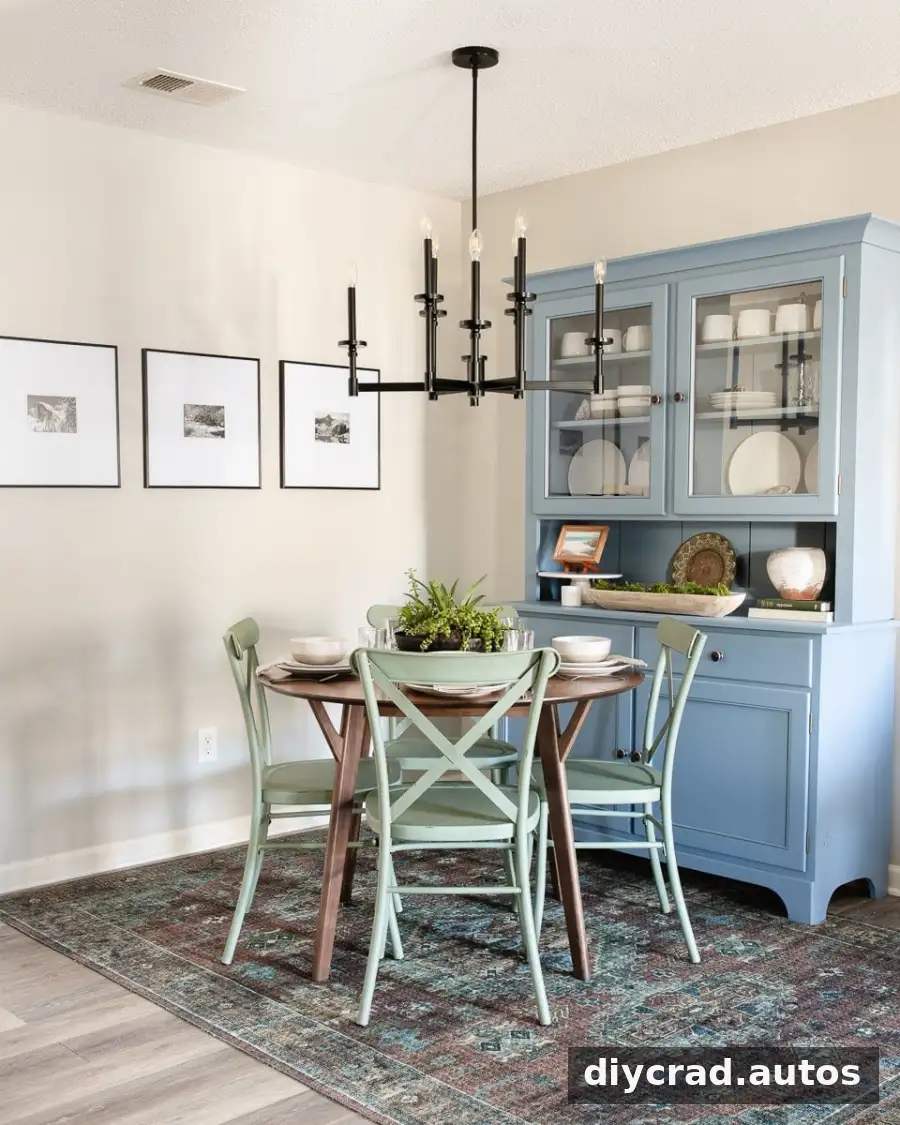
A dining nook refresh doesn’t need to involve paint, power tools, or a complete furniture overhaul. A few thoughtful changes to seating, lighting, tableware, and styling can make the space feel brighter and more welcoming while keeping the colors and pieces you already enjoy.
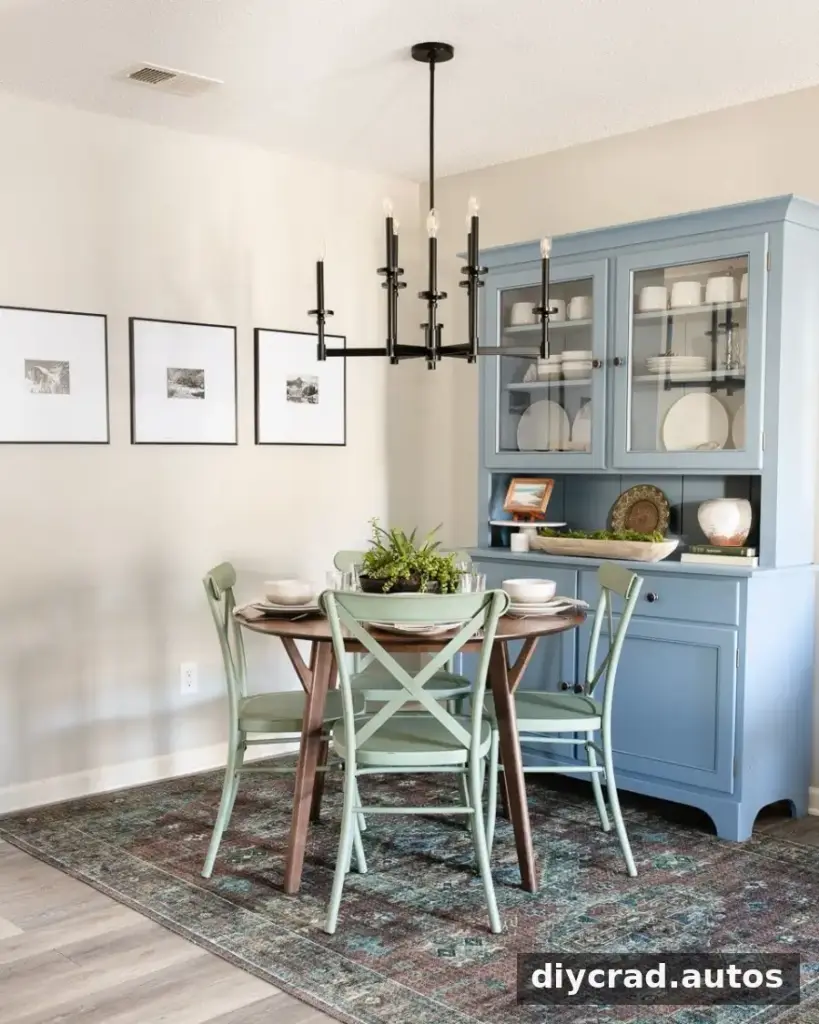
This makeover brought together existing belongings, secondhand finds, and a handful of simple decor updates. The aim was to work with the nook’s light blue china cabinet and established color palette, adding accents inspired by vibrant blue, sage green, and rust. The changes took about three hours and did not require painting or major construction.
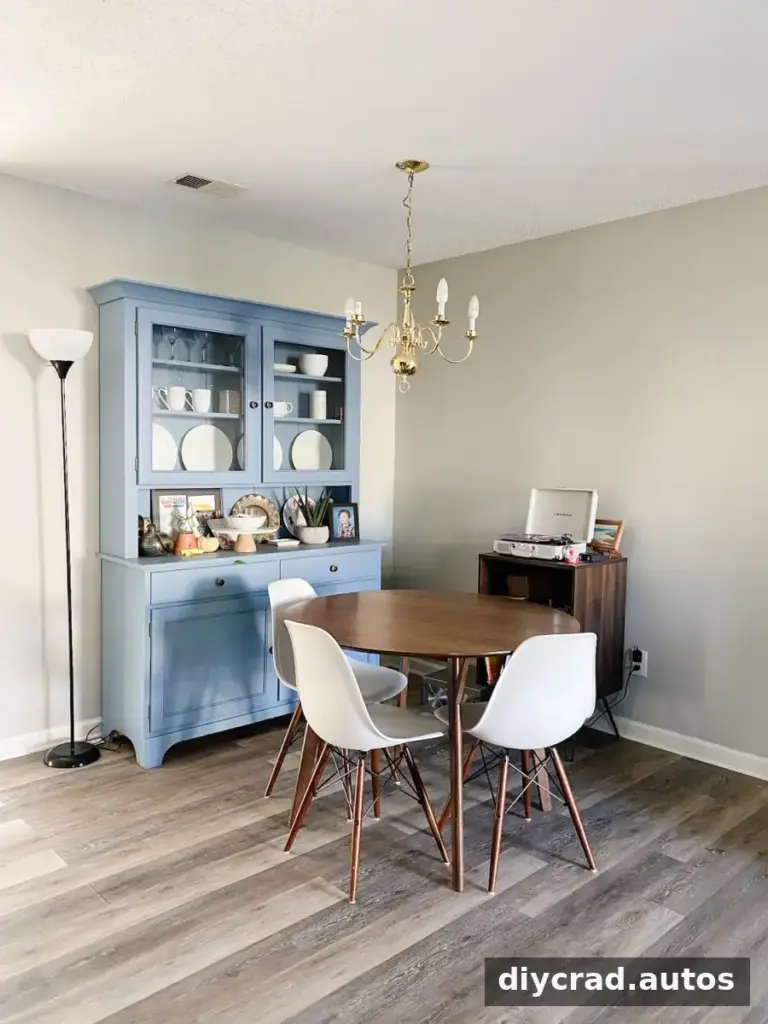
Before starting, consider how the nook is used and measure the available floor space. Keeping useful furniture and rearranging items first can help you avoid unnecessary purchases—and prevent a new table or rug from making a compact area feel crowded.

7 Ways to Refresh a Dining Nook
1. Replace worn chairs or mix the seating
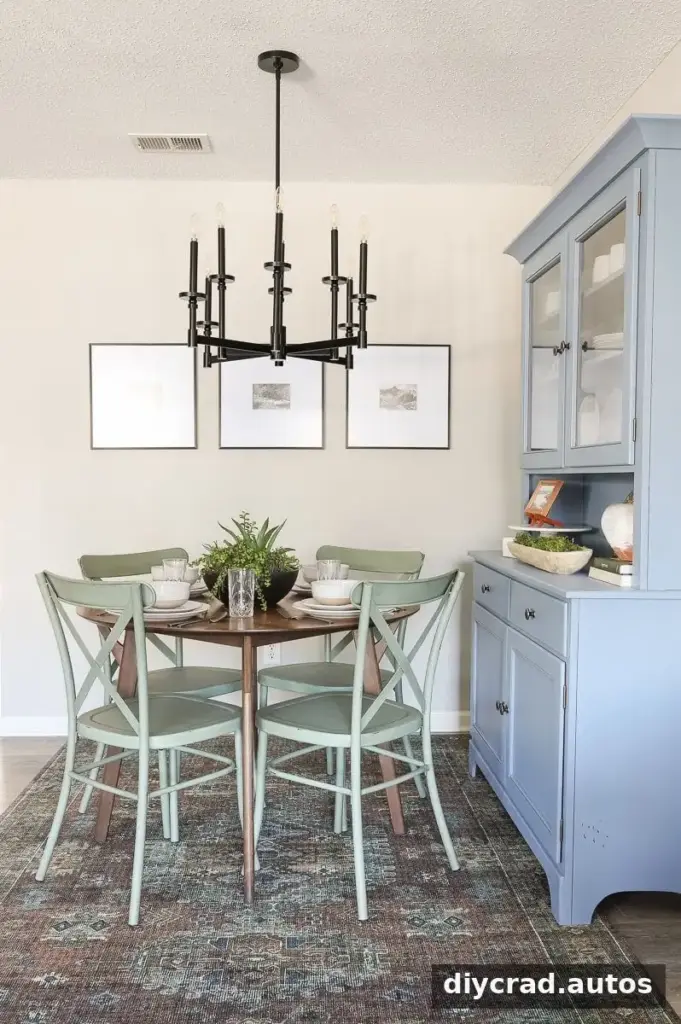
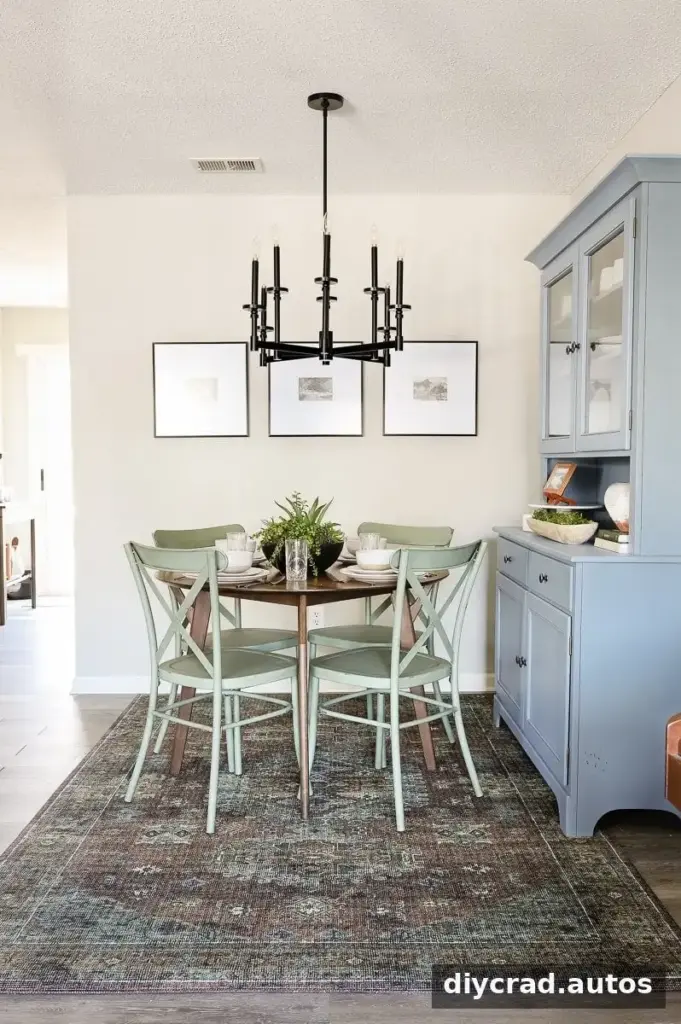
Chairs do not have to match the table to make a dining area feel coordinated. A different style can give the nook a collected look, while replacing unstable or damaged chairs is a practical improvement. In this space, sturdy X-back chairs in sage green added color to a corner without windows.
Before choosing replacements, measure the table and the space around it. Check that chairs can slide out comfortably and that their height works with the tabletop. A table does not need replacing if it is in good condition and fits the room.
2. Improve the lighting
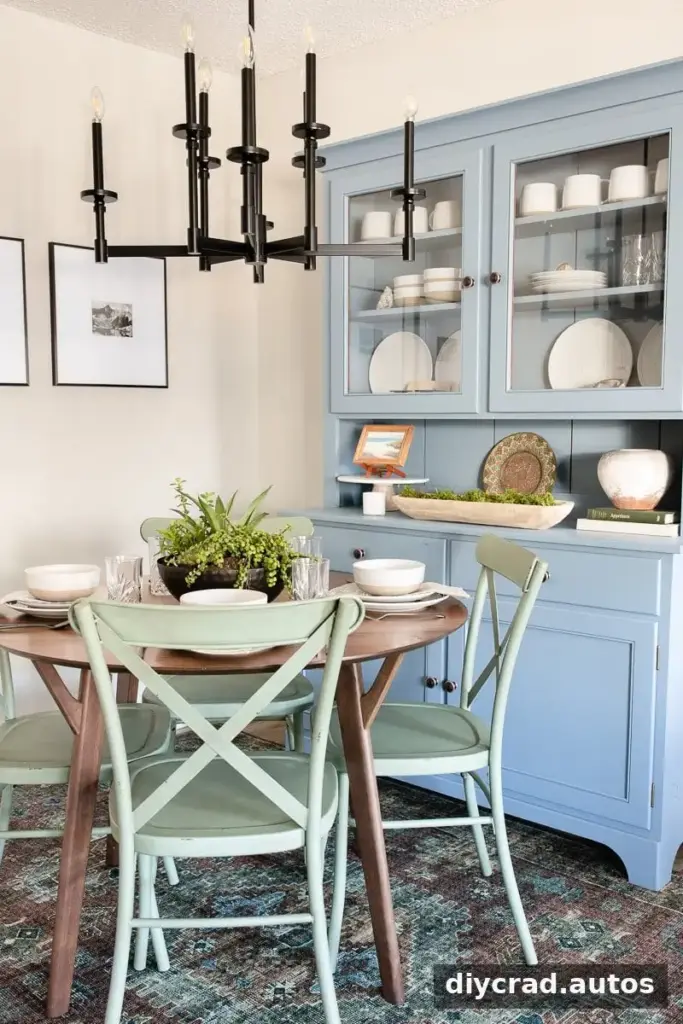
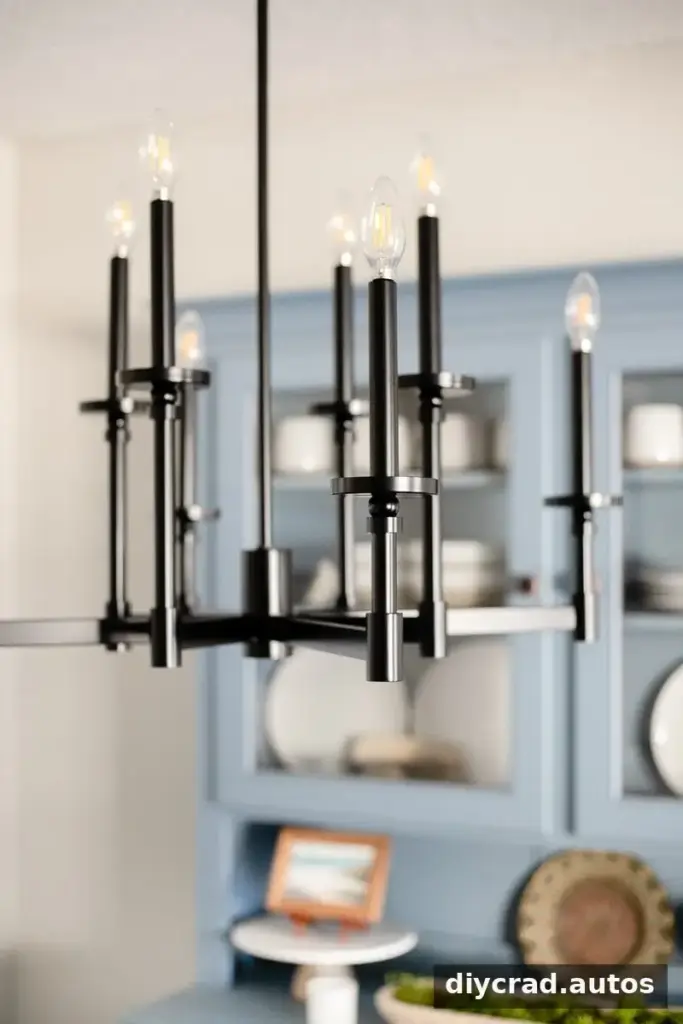
A well-chosen chandelier can make a dining nook more comfortable to use and create a clear focal point. Replacing a fixture that does not work properly can also improve the light available for meals and everyday tasks.
As a general placement guide, hang the bottom of a chandelier about 30–36 inches above the dining table. The right height can vary with the fixture and ceiling, so check sightlines and follow the fixture’s installation instructions. For electrical work, use a qualified professional when needed.
3. Add personal wall art
A small arrangement of framed art can bring personality to a dining corner without taking up table or floor space. Thrift stores, existing prints, and artwork from old calendars can all be sources of inexpensive pieces.
For a coordinated display, choose images that connect to the room’s colors or to places and interests that matter to the household. Using frames with mats can help different prints look like a unified collection. Before hanging anything, arrange the frames on the floor to test spacing.
4. Replace chipped or mismatched dinnerware
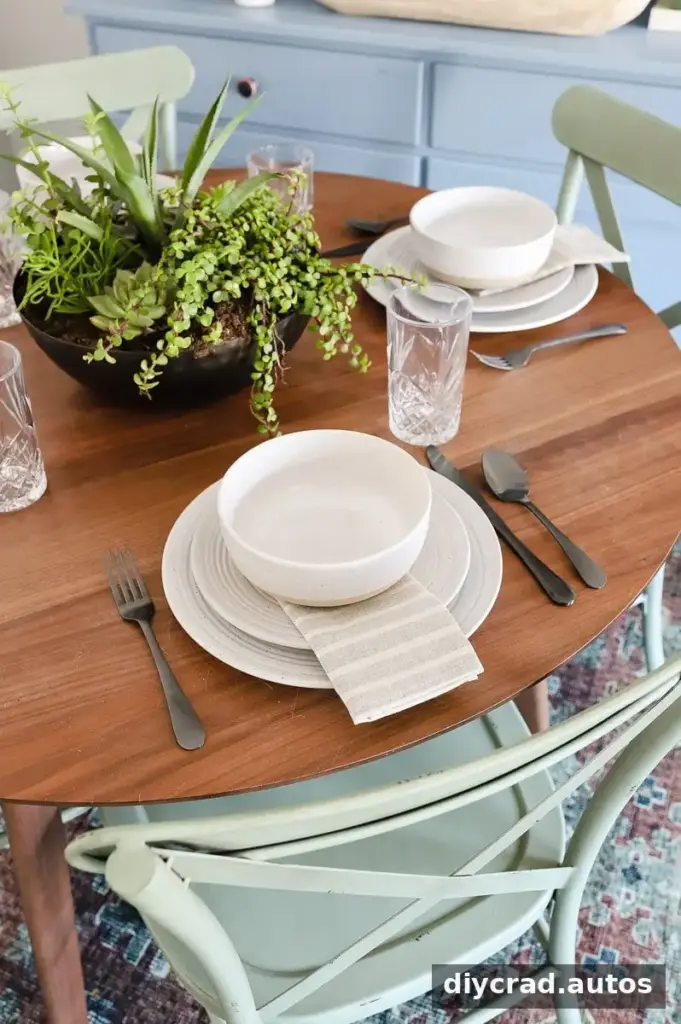
Fresh, sturdy dinnerware can make everyday meals feel more put together. If plates are chipped, cracked, or difficult to match, replacing the pieces used most often may be more useful than buying a large set all at once.
Choose dishes that fit your storage space and routine. Durable stoneware is one option for regular use; check care instructions before putting any dinnerware in a dishwasher or microwave.
5. Restyle the china cabinet
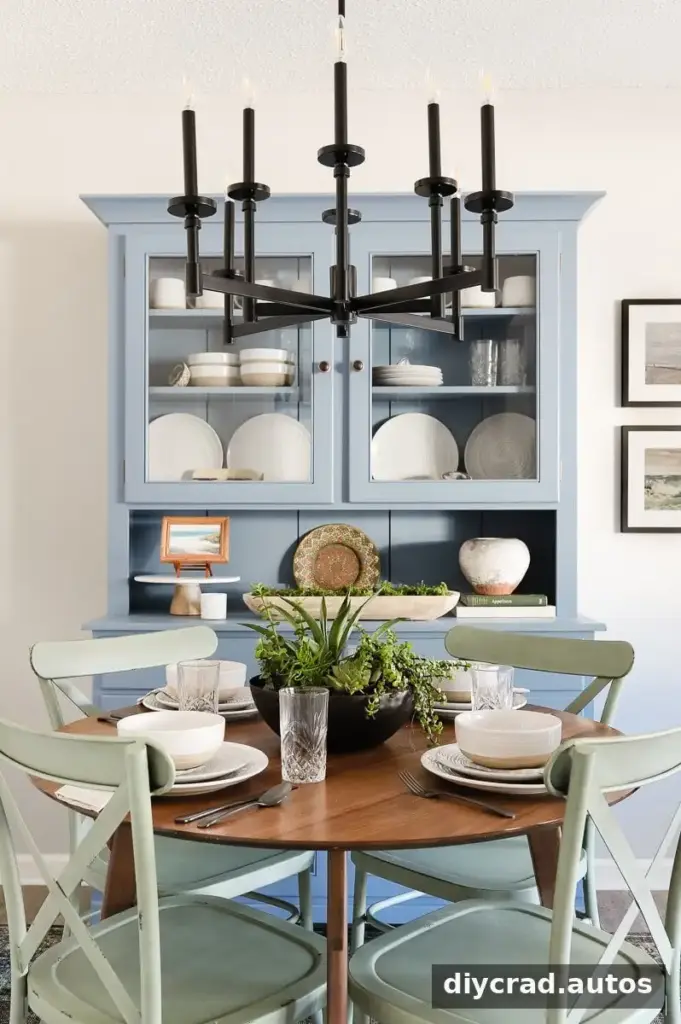
Give favorite objects room to stand out by editing and rearranging the cabinet shelves. A painting, heirloom platter, or vase can become a focal point when it is not crowded by too many other items.
Try stacking some dishes and varying the height of nearby pieces. Small collections, such as geodes or fossils, can be displayed alongside tableware, while a distinctive plate or painting can sit near the center. Keep frequently used dishes easy to reach and avoid placing heavy items where they could fall.
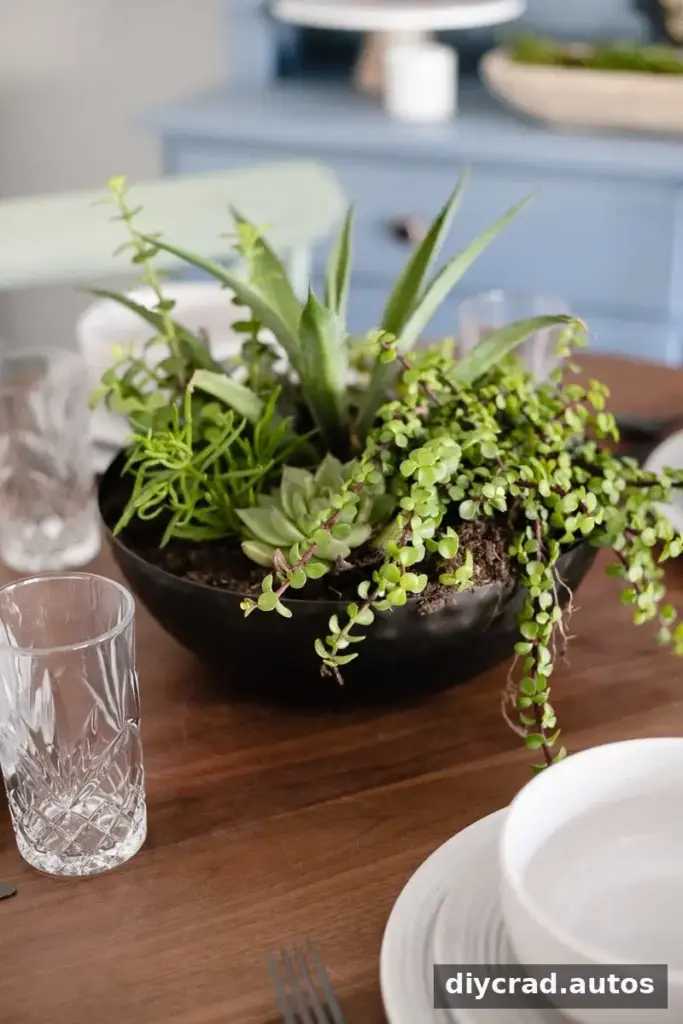
6. Make a plant centerpiece
A small plant arrangement adds color and a natural element to the dining table. Succulents can work well as a compact centerpiece, provided they receive suitable light and are not watered too often.
A decorative bowl may not have drainage holes. To protect the plants, use a nursery pot or liner with drainage and empty excess water rather than relying on a layer of rocks to prevent overwatering. Keep the arrangement low enough that it does not block conversation across the table.
7. Define the nook with a low-pile rug
In an open-plan home, a rug can visually separate the dining area from an adjoining living space. Select a low-pile or indoor-outdoor style so chairs can move more easily and crumbs are simpler to clean up.
Measure the table and chairs before buying a rug. Ideally, chairs should remain on the rug when pulled back from the table. A washable or easy-to-clean material can be especially practical for a dining area.
Finishing touches for a dining nook refresh
Not every update needs to be new. Reusing pieces in a different arrangement can save money and make the finished space feel more personal. Before shopping, make a short list of what the nook is missing, such as reliable seating, brighter lighting, or a rug that suits the room’s size.
Useful finishing pieces might include X-back dining chairs, matted floating frames, a hammered metal bowl, exposed clay stone dinnerware, highball glasses, and black matte flatware. Treat these as ideas rather than a checklist: choose only the items that fit your space, budget, and everyday needs.
Conclusion
A successful dining nook refresh is about improving comfort and making the area feel intentional—not replacing everything. Start with one practical change, such as stabilizing the chairs or updating the lighting, then add wall art, a plant, or a low-pile rug as space allows. With a few considered updates, a dining nook can feel brighter, more organized, and ready for everyday meals.