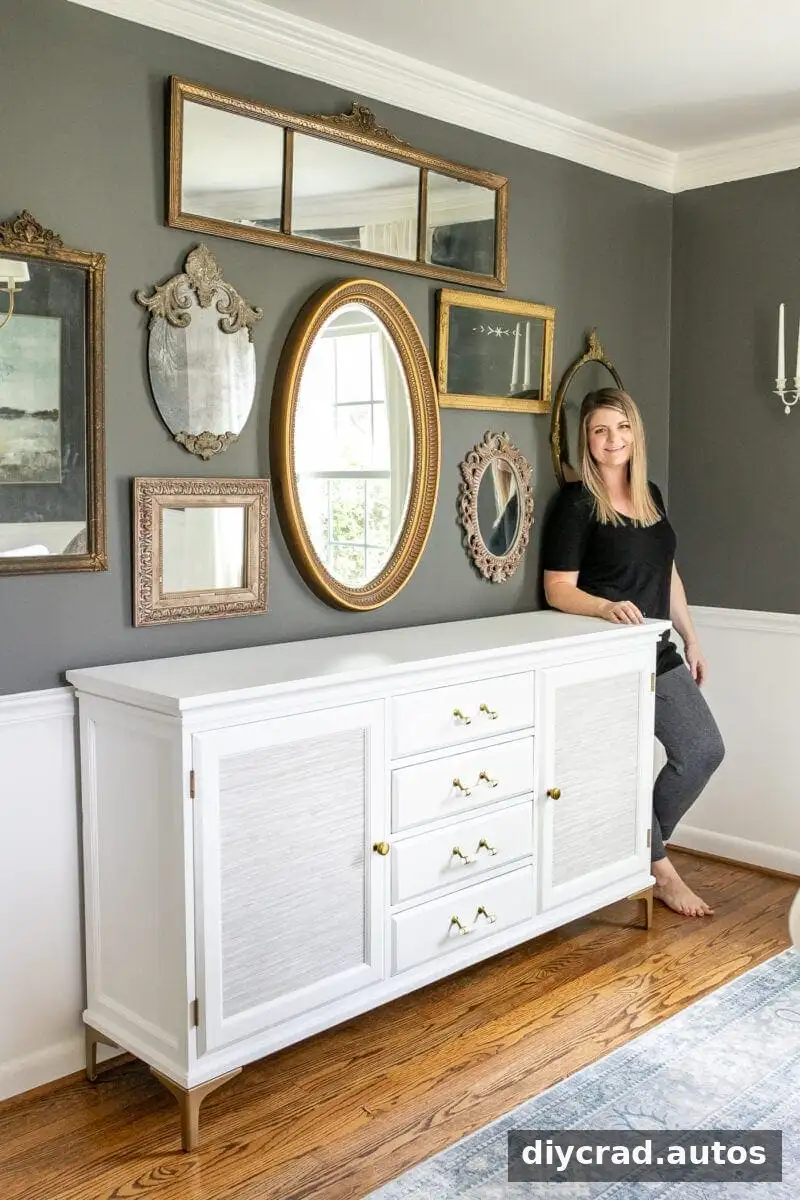
Knowing how to decorate a buffet can make a dining room feel more polished without making the surface look crowded. A few simple principles—starting with height, arranging objects thoughtfully, and mixing materials—can help you create a display that suits your room and still leaves space for practical use.
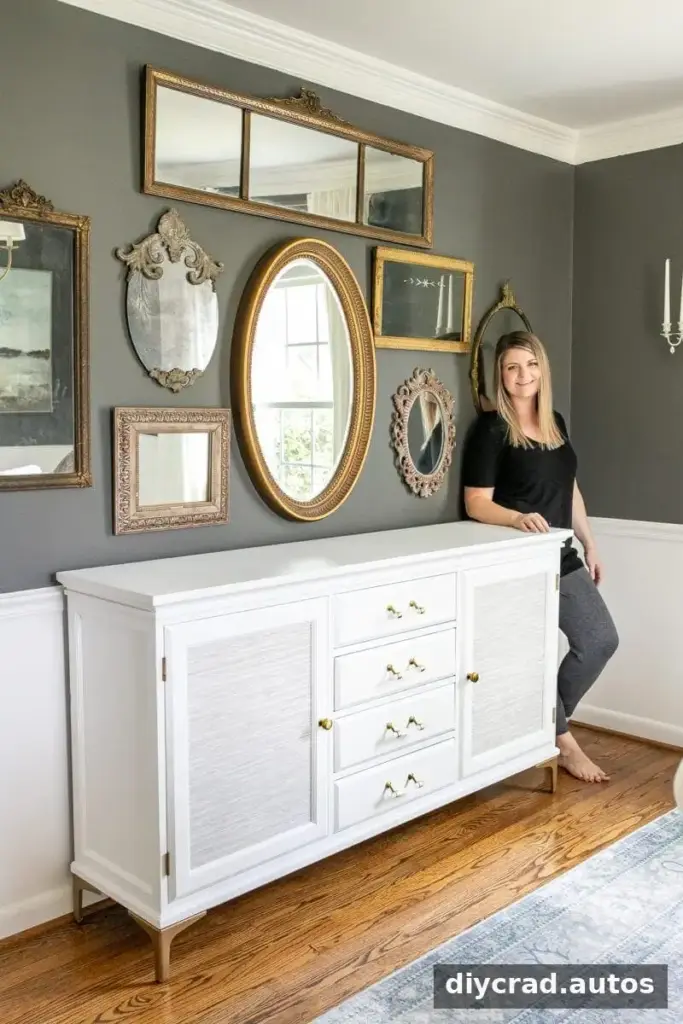

When styling a buffet beneath a prominent mirror or artwork, keep the scale of the display in mind. Decor that is too tall or placed directly in the center may compete with what is above it. Try a balanced arrangement with a focal object toward one side, then adjust the other pieces until the overall composition feels considered.
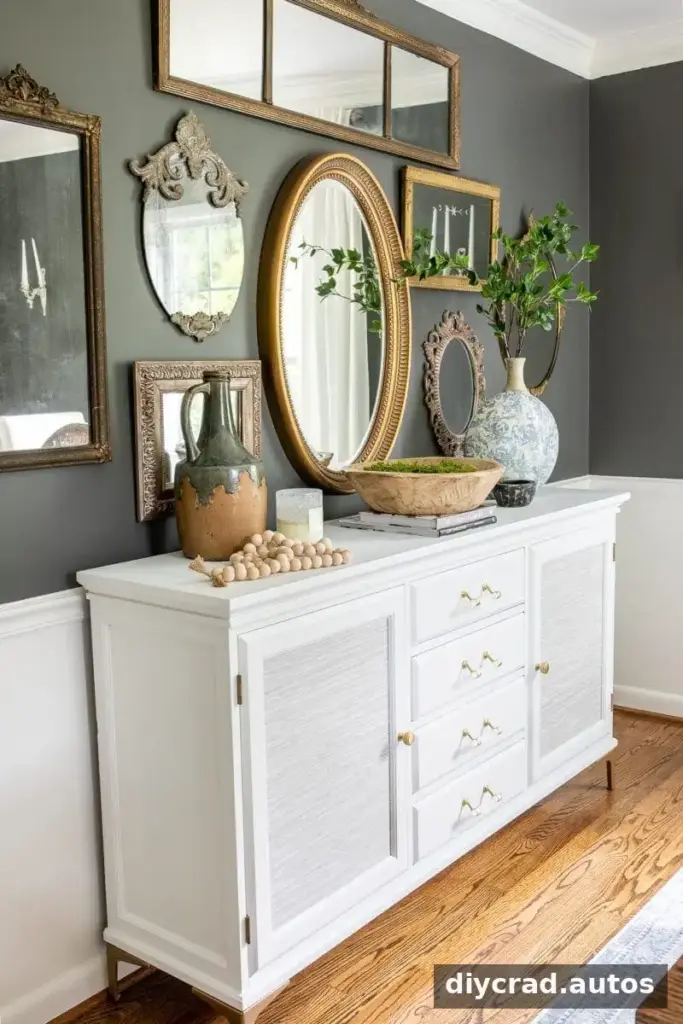
A vase with a blue-and-white pattern can connect with other blue accents in a dining room, while its shape and finish add character to the buffet. Choose a focal piece that works with the colors and materials already in the space; it can provide a useful starting point for selecting the rest of the display.
How to Decorate a Buffet: 5 Practical Tips
1. Begin with your tallest item
Choose the tallest object first, such as a vase, lamp, or sculptural piece. Placing it toward one end rather than directly in the middle can create an appealing starting point for the arrangement. If there is a mirror or artwork above the buffet, check that the tallest item does not block an important part of it.
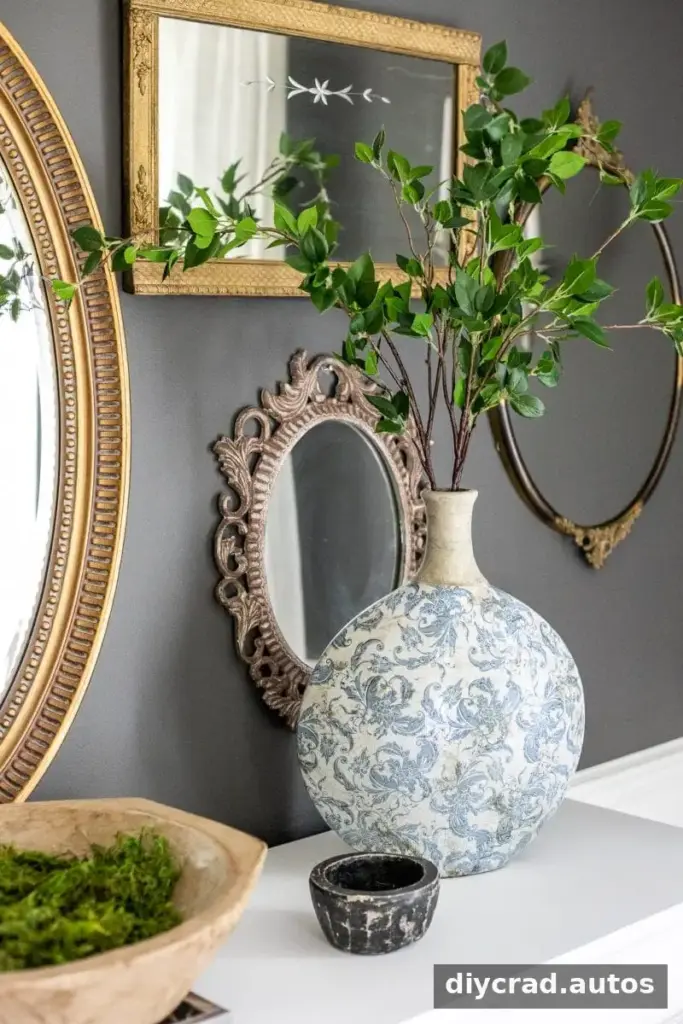
Practical tip: Step back and view the display from across the room. This makes it easier to spot pieces that feel too tall or out of proportion.
2. Arrange objects to suggest triangles
Try placing objects at different heights so their outlines suggest a triangle. For example, a tall vase can form one point, with shorter objects stepping down on either side. This creates a clear visual flow and helps the arrangement feel connected rather than like a row of unrelated items.
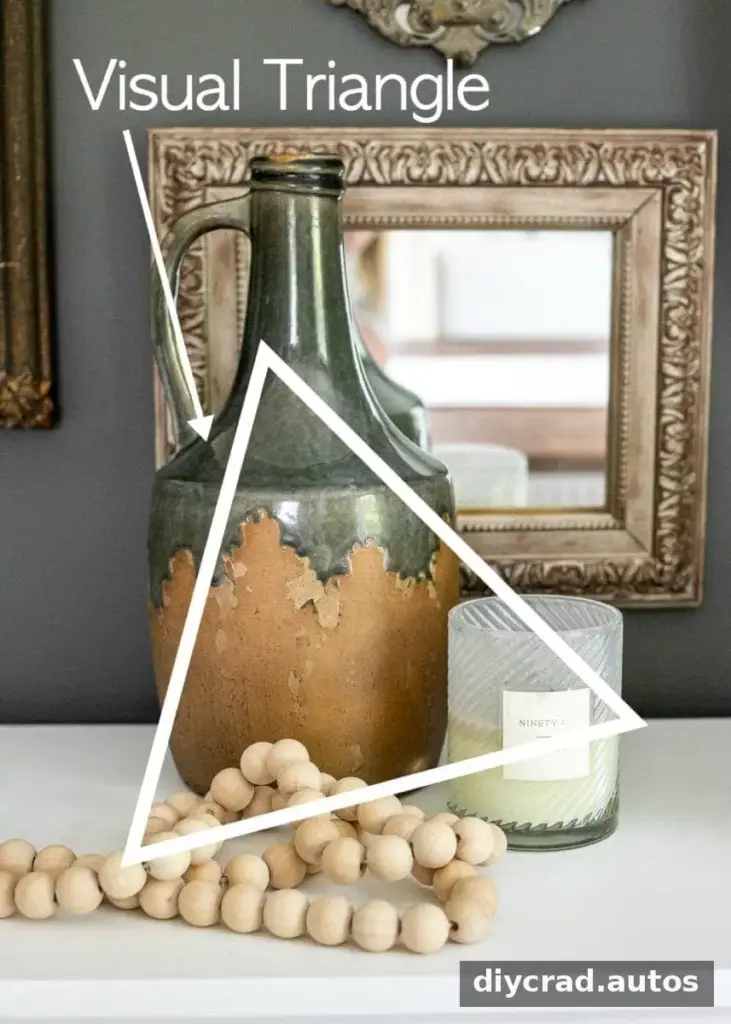
Think of this as a flexible guide, not a strict rule. A little asymmetry can make a display feel more relaxed, especially when the objects differ in shape or size.
3. Group decor in threes
Grouping items in threes is a simple way to build small, cohesive arrangements. A vase and a small bowl can sit together at one end, while a pair of jugs with decorative beads forms another grouping. A wooden bowl placed on a stack of books can create a third cluster in the middle.
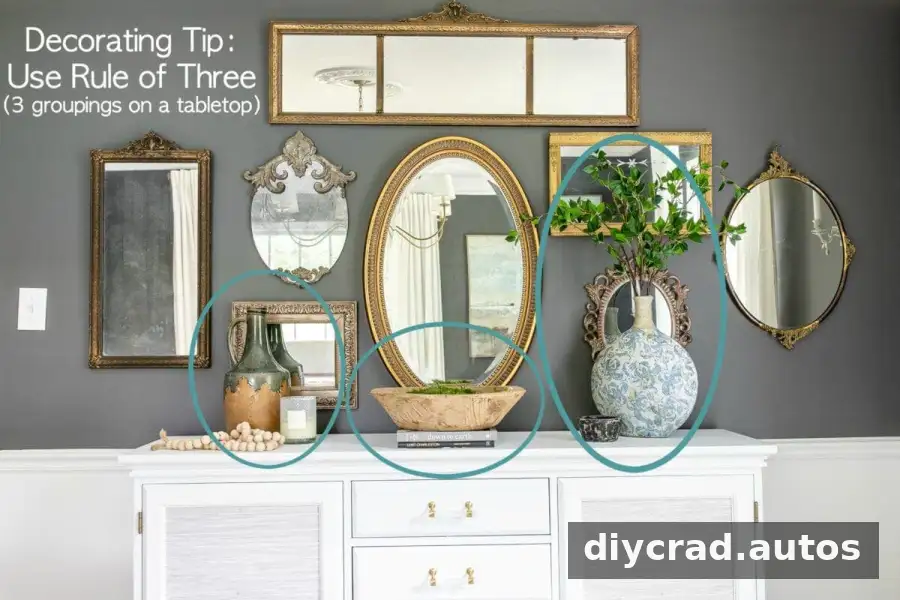
Vary the height and shape within each group so the objects remain easy to distinguish. Leave a little space between clusters to keep the buffet from looking crowded, and avoid adding pieces just to fill every open spot.
4. Add a fresh or natural element
A fresh detail can bring softness and life to a display. Consider a bouquet, a potted plant, leafy stems in a vase, or moss arranged in a bowl. Choose an option that fits the available light and the amount of care you can provide. If using fresh flowers, make sure the container is stable and suitable for water.
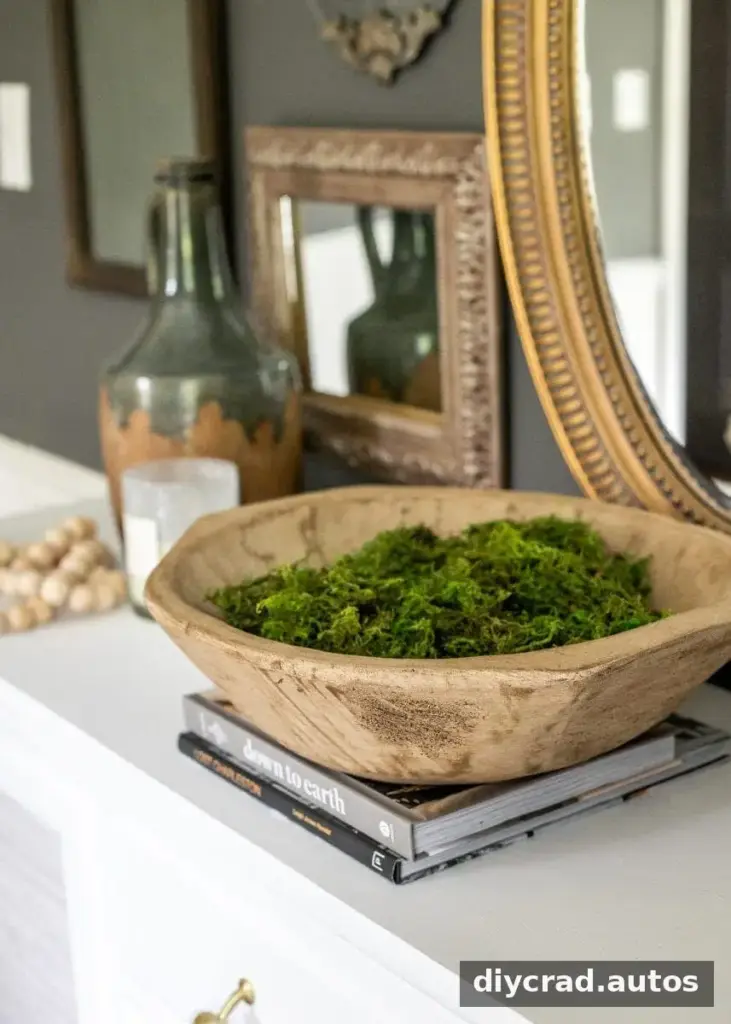
For a low-maintenance arrangement, dried stems or a plant that suits the room’s conditions can offer a natural touch without requiring frequent replacement.
5. Mix textures and materials
Combining several finishes makes a buffet display more interesting, even when the color palette is restrained. Aim for three or four materials, such as ceramic, wood, glass, stone, metal, paper, or woven fibers. In this arrangement, ceramic vases, wooden beads and a bowl, paper books, and a black granite bowl provide contrast through texture.
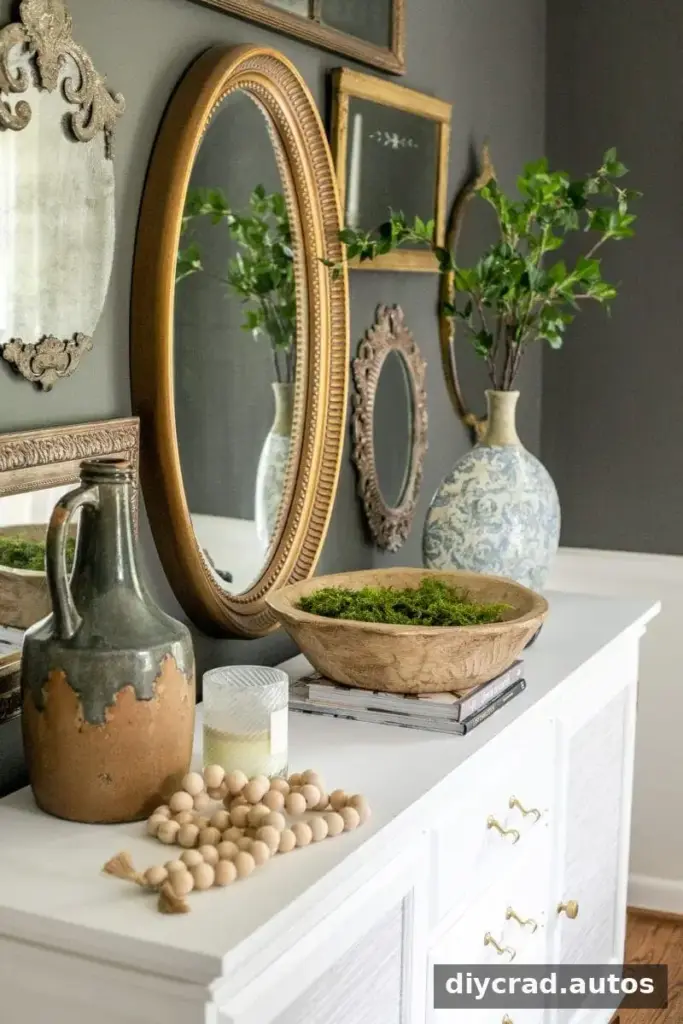
Use color to connect the different materials. Neutral tones can keep the display calm, while a patterned blue-and-white piece adds emphasis and relates to other blue details in the room. If the buffet is used for serving, leave enough clear surface area for dishes and serving pieces.
Final tips for styling a buffet
To decorate a buffet successfully, begin with one focal object, build a few balanced groupings around it, and include a mix of heights, textures, and natural details. Then step back, check the display against the wall decor, and remove anything that feels unnecessary. These simple guidelines give you a starting point while leaving plenty of room to adapt the arrangement to your home and everyday needs.